A full conference room can still feel quiet if delegates cannot ask questions, follow a speaker clearly, or connect with people outside their immediate table. Engagement is not created by an event app alone. It comes from giving every participant a practical way to hear, contribute, vote, network, and access content in the language and format they need. The best tools for delegate engagement work together to remove friction at each of those moments.
For organizers, the right technology mix depends on the agenda, venue, audience profile, languages, and the level of participation required. A leadership meeting with 40 executives needs a different approach from a 1,000-person international summit with concurrent sessions. The following tools provide a reliable starting point for planning events where delegates are active participants rather than passive observers.
Best tools for delegate engagement: start with participation
1. Conference discussion and microphone systems
A conference microphone system is the foundation of meaningful room participation. Tabletop delegate units, chairman microphones, and wireless handheld or gooseneck microphones make questions, comments, and panel exchanges audible to everyone in the room and to remote attendees.
For formal meetings, a managed discussion system can control who speaks, create a speaker queue, and give the chairperson priority control. This is particularly useful for board meetings, government sessions, annual general meetings, and multi-stakeholder forums where orderly discussion matters. For less formal conferences, professionally managed wireless microphones may be the better fit because they allow hosts to move quickly between audience questions.
The trade-off is operational: more controls create more structure, but may feel restrictive at an informal event. The system should reflect the culture of the room, not force every program into the same format.
2. Conference management software
Conference management software turns participation into usable event data. Depending on the program, it can support delegate registration, session attendance, speaker lists, voting, agenda management, reporting, and name display integration.
This is especially valuable when a meeting requires formal records, controlled voting rights, or accurate participation reporting. A corporate secretary may need a verified voting process. A summit organizer may need to see which sessions attracted the highest attendance. A production team may simply need a clearer way to coordinate participant details across several rooms.
Software should not become another barrier for delegates. Select functions that solve a real event requirement, and provide clear instructions before the program begins. For high-stakes meetings, technical operators should be on hand to manage the system and respond immediately if a delegate needs assistance.
3. Live polling and moderated Q&A
Live polls turn a one-way presentation into a conversation. A speaker can test understanding after a technical presentation, ask delegates to prioritize business challenges, or use a word cloud to surface common concerns. Moderated Q&A lets attendees submit questions digitally, which is often more inclusive than relying only on those willing to raise a hand.
The most effective polls are brief and tied directly to the agenda. Asking delegates to vote every few minutes can distract from the content; asking at a decision point can sharpen it. Assign a moderator to filter duplicate questions, group related topics, and ensure the speaker receives a manageable selection.
For audiences with limited mobile access, polling can also be supported through conference delegate units or facilitated audience response methods. The goal is participation, not forcing a particular interface.
4. Simultaneous interpretation systems
Language access is engagement. If an international delegate must wait for consecutive interpretation or follow a speaker in a second language, their ability to react, ask questions, and network is reduced. Simultaneous interpretation systems allow delegates to select their language channel and listen through dedicated receivers and headsets while the speaker continues without interruption.
For multilingual conferences, this system supports a more balanced room. Delegates can follow complex presentations in real time, contribute in their preferred language, and stay connected to rapid panel discussions. It is well suited to diplomatic programs, international summits, government events, medical congresses, and cross-border corporate meetings.
Planning requires more than booking headsets. Organizers need to confirm language pairs, interpreter booths or remote interpreter workflows, receiver quantities, room coverage, and collection procedures. A qualified technical team can align these details with the program schedule and venue layout.
5. AI speech translation and captioning
AI speech translation and live captions can extend accessibility where full interpretation is not required or where additional language support is useful. Captions help delegates who are hard of hearing, processing technical terminology, or following a speaker with an unfamiliar accent. Translation displays can also provide useful real-time support for mixed-language audiences.
This technology is not a universal replacement for professional interpreters. High-level negotiations, legal proceedings, financial announcements, and detailed scientific content can require the judgment, cultural fluency, and accuracy of experienced human interpreters. AI translation is most effective when expectations are clear, audio quality is high, and terminology is prepared in advance.
6. Digital name signs
Digital name signs do more than identify speakers. They improve the pace and professionalism of a panel by displaying names, titles, organizations, and, where needed, agenda information or branded visual content. Delegates can quickly see who is speaking, which is particularly useful in large conference rooms and multilingual sessions.
For formal summits and executive meetings, name signs can also be updated centrally when seating changes occur. That flexibility reduces last-minute printing issues and helps organizers maintain a polished stage environment. Branded visual consistency matters because it reassures delegates that the event is organized with the same care as its content.
7. Silent conference headsets
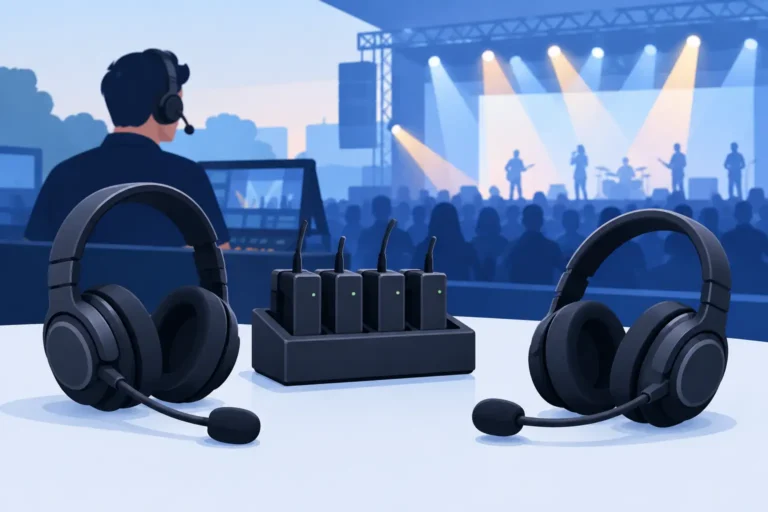
Silent conference systems use wireless headsets to deliver multiple audio channels within the same venue. Delegates can choose a session, language, or audio feed without requiring separate soundproof rooms. This makes them a practical tool for exhibitions, outdoor activations, breakout programs, and venues with noise restrictions.
A silent headset setup can increase session options in spaces that would otherwise support only one audible presentation at a time. It can also create a focused listening environment on a busy exhibition floor. However, headset distribution and collection must be planned carefully. Clear check-in processes, charging capacity, and on-site support protect the delegate experience.
8. Event networking tools and digital directories
Networking often determines whether delegates describe an event as valuable. Digital directories, meeting-request functions, and interest-based matchmaking can help attendees find relevant peers, sponsors, or subject-matter experts before they leave the venue.
The technology works best when the event team gives networking a place in the program. A directory alone will not create useful introductions. Build time for hosted meetings, sector-based roundtables, partner lounges, or structured networking breaks. Privacy settings are also essential, particularly for executive and government audiences who may not want their contact details broadly visible.
9. Remote interpretation and hybrid participation platforms
Hybrid events need more than a video feed. Remote delegates should be able to hear every speaker clearly, view presentations, submit questions, participate in polls, and access interpretation where required. Remote interpretation can connect qualified interpreters to an event without placing every language professional on site, provided the technical workflow is tested thoroughly.
Hybrid delivery adds complexity. Audio feeds, camera positions, presentation capture, return video, platform moderation, internet redundancy, and remote support all need advance planning. The most common failure is treating virtual participation as an add-on after the room design is complete. Design the experience for on-site and remote delegates from the first production meeting.
10. Professional audio, recording, and show communications
Poor audio is one of the fastest ways to lose a room. Professional sound systems, properly tuned for the venue, ensure that speakers are intelligible from the front row to the back. Recording systems preserve keynote sessions, panel discussions, and training content for delegates who want to revisit it after the event.
Behind the scenes, show intercoms and TDRA-licensed two-way radios give the event team dependable communication across large venues, exhibition halls, and multi-room programs. Delegates may never see these tools, but they benefit from faster room resets, coordinated speaker entrances, prompt technical response, and a calmer event environment.
Build an engagement stack around the event objective
There is no single best combination for every program. A bilingual corporate town hall may need wireless microphones, live polls, captioning, and recording. An international policy conference may require a full discussion system, simultaneous interpretation, digital name signs, and managed Q&A. An exhibition-led program may benefit most from silent headsets, networking tools, and reliable radio coordination.
Start by mapping the delegate journey: arrival, registration, content access, participation, networking, and follow-up. Then identify where communication could break down. This approach prevents overspending on features that look impressive but do not serve the audience.
For complex programs in Dubai, across the GCC, or internationally, DLC Events can configure rental packages around the venue, audience size, languages, and event format, with technical crews supporting setup and live operation. The strongest engagement technology is the technology delegates barely have to think about because it lets them focus on the conversation in front of them.