A keynote begins in English, a panelist answers in Arabic, and delegates from across the GCC, Europe, and Asia need to follow both without waiting for a pause. AI speech translation for events can make that possible, but only when it is planned as part of the event’s complete communication workflow – not treated as a last-minute app download.
For conferences, corporate meetings, summits, and exhibitions, the objective is simple: every attendee should understand the message, participate confidently, and leave with the same clarity as the person sitting closest to the stage. Achieving that outcome requires the right translation platform, clean audio, language planning, and experienced technical operation.
What AI Speech Translation Does at an Event
AI speech translation listens to a speaker’s live audio, converts speech to text, translates it into selected languages, and delivers the result as captions, synthesized audio, or both. Depending on the setup, attendees may view translated captions on a personal device, a display, or a dedicated event interface. They may also listen to translated audio through headphones or their own mobile device.
This is particularly useful when an event has multiple audience languages but does not require a full interpretation booth and interpreter team for every language. A leadership town hall, product briefing, training session, or international exhibition presentation may need fast, accessible language coverage across several rooms or sessions.
The technology can support live communication at scale, but it is not a direct replacement for professional simultaneous interpreters in every setting. Sensitive negotiations, legal sessions, high-level diplomatic meetings, technical scientific discussions, and heavily nuanced presentations may still require human interpretation. The right choice depends on the content, the languages involved, the audience profile, and the consequences of a misunderstood statement.
Where AI Speech Translation for Events Fits Best
AI translation is most effective when speakers use clear, well-structured language and the event environment provides strong audio control. Corporate presentations, internal briefings, product launches, education sessions, guided tours, and multilingual Q&A formats are common applications.
For an event organizer, its practical value is flexibility. New languages can often be added more easily than with a traditional interpretation model, which can help when delegate registrations change late in the planning cycle. It can also give attendees a discreet way to follow a session in their preferred language without adding visible infrastructure throughout the room.
At an exhibition or a multi-track summit, captions can be especially valuable. They support international attendees, participants with hearing needs, and people joining a session in a noisy environment. In hybrid programs, translated captions may also improve access for remote viewers, provided the streaming and audio-routing plan is designed correctly.
However, the best use case is not always the largest language list. Adding languages that no attendee needs creates cost and operational complexity without improving the delegate experience. Registration data, invited markets, speaker languages, and the event agenda should guide the coverage plan.
The Audio System Determines the Result
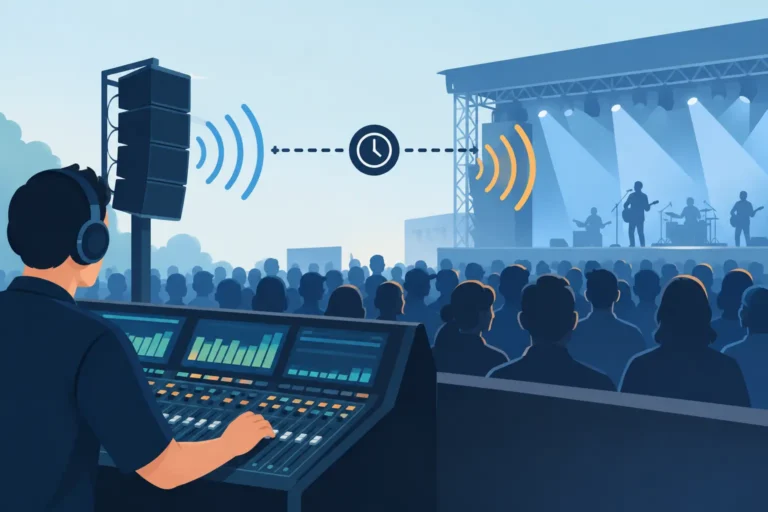
Translation quality starts before the AI platform receives a single word. If a presenter’s microphone is too far away, a panel has inconsistent levels, or room noise enters the signal, the translated output will suffer. The platform can only work with the audio it is given.
A professional event setup uses appropriate conference microphones, wireless handhelds, lapel microphones, or headset microphones based on the format and venue. The speech feed should be clean, properly mixed, and routed to the translation system independently of the room loudspeakers. This gives technicians control over levels and reduces the risk that audience noise, walk-in music, or playback audio is treated as spoken content.
Panel sessions deserve particular attention. Speakers may interrupt one another, use acronyms, or switch languages mid-sentence. A technical rehearsal allows the production team to confirm microphone positions, test how the platform handles speaker changes, and establish practical moderator guidance. Asking panelists to speak one at a time is not only good event etiquette – it directly improves translated accuracy.
Speaker Preparation Improves Accuracy
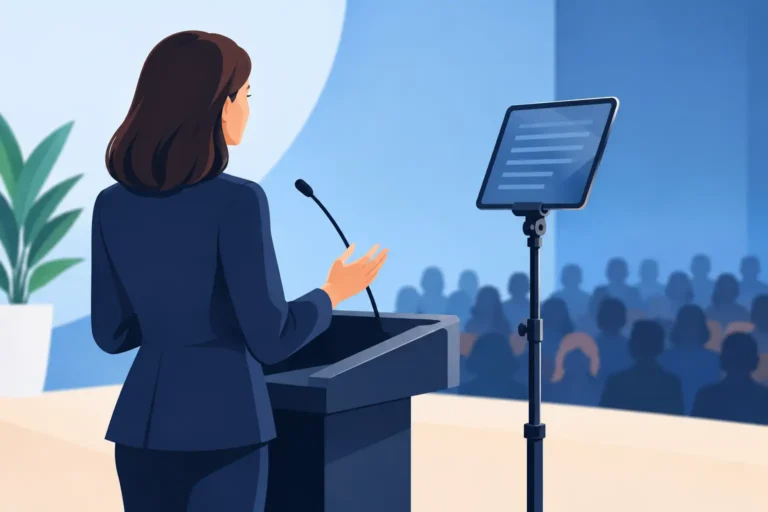
Presenters do not need to speak unnaturally slowly, but they should speak clearly and avoid reading dense slides word for word. Names, product terminology, industry abbreviations, and regional references can be prepared in advance where the platform supports custom vocabulary.
A speaker briefing should also cover the difference between captions and interpretation. Captions may appear with a short delay, and automated translations can simplify phrasing. For keynote statements that must be quoted exactly, organizers should consider whether human interpretation, pre-approved translations, or multilingual presentation content is more appropriate.
Choosing Captions, Audio, or Both
There is no single delivery method that suits every room. The attendee journey should determine the format.
Translated captions work well for training rooms, exhibition theaters, and general sessions where attendees can comfortably view a screen or use a personal device. They are easy to distribute and can support several languages without issuing separate receiver channels.
Translated audio is often preferable for formal conferences, large ballrooms, and sessions where attendees need to remain focused on the speaker rather than a screen. Audio delivery can be provided through attendees’ own devices or through professional headset and receiver systems. Dedicated hardware may be the stronger option when venue Wi-Fi is limited, personal-device use is not appropriate, or the event requires controlled distribution.
Many events benefit from a mixed approach. Captions can support accessibility and secondary languages, while dedicated interpretation channels serve priority languages or complex sessions. This hybrid model gives organizers flexibility without applying the same solution to every agenda item.
Plan the Attendee Experience, Not Just the Platform
The most common operational issue is not translation quality. It is attendee adoption. If guests do not know where to access the translation, cannot connect to the event network, or discover the service only after a session has started, the investment will not deliver its full value.
Clear instructions should appear in registration emails, event apps, room signage, and opening slides. Attendees need to know whether they should scan a QR code, join a network, bring headphones, collect a receiver, or simply view a display. A staffed help point is valuable for large events, particularly when participants are arriving from different countries and using a wide range of devices.
Network planning is equally important. A personal-device translation service may depend on reliable venue Wi-Fi or mobile data capacity. In a packed ballroom, hundreds of guests attempting to connect at once can expose weak network design. The technical team should assess anticipated user numbers, room layout, internet resilience, and backup options before event day.
When Human Interpreters Remain the Better Choice
AI speech translation provides speed and broad coverage, but high-stakes communication still calls for professional judgment. Human interpreters understand tone, intent, cultural references, and context in ways automated systems may not consistently capture.
For government programs, board-level discussions, regulated industries, contract negotiations, or events where a small wording change could alter meaning, simultaneous interpretation is often the more reliable choice. The same applies to speakers who use highly technical terminology, fast-paced humor, or frequent code-switching between languages.
This does not mean organizers must choose one model for the entire event. A practical design may use professional interpreters for executive sessions and AI translation for breakouts, tours, workshops, or exhibition presentations. Matching the service level to the risk level is usually the most cost-effective approach.
Build Translation Into the Production Schedule
Translation should be discussed during agenda and venue planning, not after the stage design is finalized. The event team needs to confirm the language pairs, expected attendee numbers, room-by-room requirements, microphone plan, network access, display locations, and whether recordings will be required.
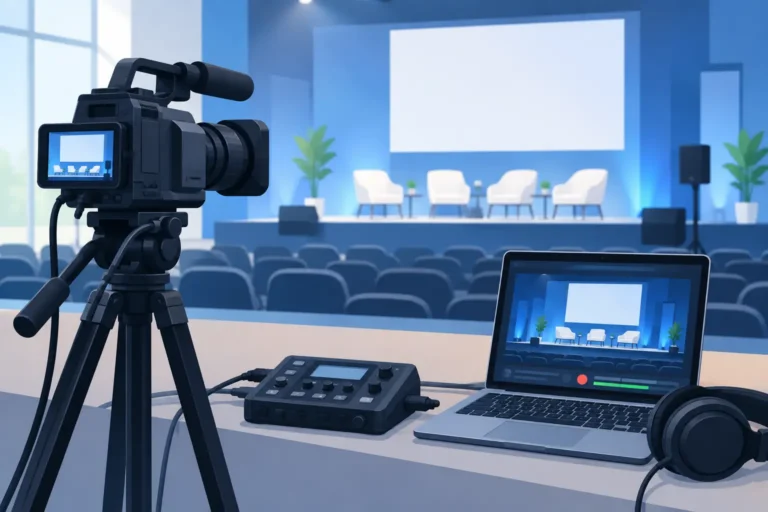
A pre-event test should include real speaker audio, not only a technician reading sample text. Test the actual room acoustics, presentation playback, caption visibility, attendee access process, and any handoff between live and remote presenters. If the agenda includes multiple rooms, a central technical plan helps ensure language settings and support procedures remain consistent.
DLC Events can configure AI speech translation alongside conference microphones, interpretation equipment, professional audio, digital displays, and managed onsite support. With more than 30 years of regional event experience, the team can help organizers select a practical language and delivery model for events in Dubai, across the UAE, and throughout the GCC.
The strongest translation setup is the one attendees barely have to think about. They hear or read what they need, follow the discussion without friction, and stay focused on the ideas being shared.