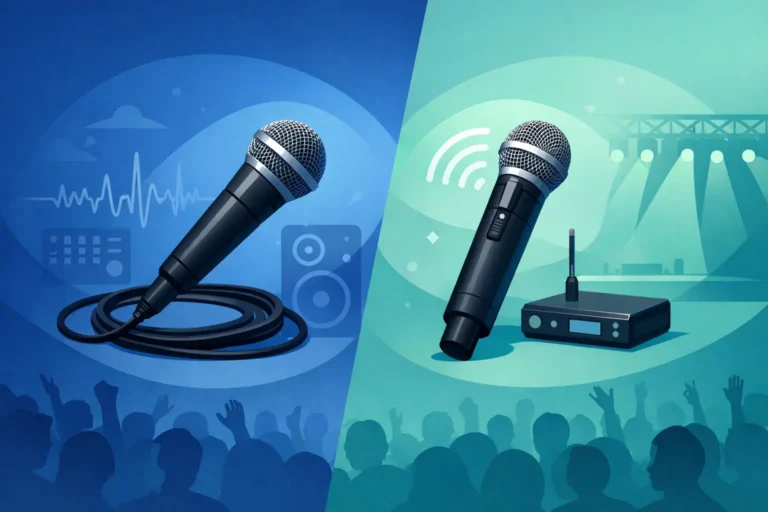
Clear audio is critical for when you are hosting an event, meeting or a corporate function. Nothing sabotages a presentation faster than listeners straining to hear the speaker or the garbled audio that’s been cut off. The right conference microphone can make or break a meeting , not just in terms of everybody being able to hear but also when it comes to setting the tone for a professional, engaging meeting.
Picking the right microphone is more than just grabbing something off the shelf. What matters is knowing your space, the nature of the event and its size so that your audio set-up does not get suspiciously easy. In this guide, we’ll explain everything you need to know in order to pick the right conference microphone for your space and event.
Knowledge about the Conference Microphones in Types
The initial thing to do in the selection of the appropriate conference room microphone is to have knowledge of the various types of microphones and their application. Both types have their merits and are made to address particular environments and requirements.
-
Tabletop and Gooseneck Microphones:
These are traditional options on a boardroom and small conference table. They normally have directional pickup, which is used to pick the voice of the speaker with minimized noise in the background.
A few of them have mute buttons and can be compatible with speakers, so you should consider them when holding an ordered meeting. They are small in size so that they can fit comfortably on tables but they do not occupy a lot of space. The first benefit is obvious as it is direct, yet they are not suited to large groups and those with fixed seating.
-
Boundary Microphones:
There are several voices that are heard by the Boundary Microphones at a greater distance across the tables. They lie flat on-surface, and record sound at a close or, at one stride across a vast gathering room.
They are nice mics to assist in clearing the clutters on the tables to ensure that all the voices are clearly understood. However, they may pick up a lot of background sound in very large rooms, and therefore it is all about placement and positioning.
-
Wireless Microphones :
They offer unmatched flexibility, especially for dynamic events, workshops, or seminars where speakers might move around. These microphones eliminate the need for long cables and allow multiple presenters to speak freely.
When choosing a wireless system, it’s important to consider battery life, range, and the potential for signal interference. While wireless setups provide mobility, they may require extra planning to avoid disruptions during events.
-
Ceiling-Mounted or Array Microphones:
They best suit big rooms and conference rooms. They are also small, and they can fully cover the entire room without occupying table space. The use of these ceiling arrays is common in professional AV applications for both reinforcement and recording, and some of these arrays have been known to receive multiple awards based on design and performance.
The advantage is that they ensure that a room has a clean look even as they also capture good audio in everyone. The other side to this is that you actually require professional installation and they might not always be economical to small areas.
Matching Microphones to Your Event Space
Choosing the right conference microphone also depends on the size and layout of your event space.
Room Size Considerations are critical. Small rooms can usually rely on tabletop or gooseneck microphones, as their pickup range is sufficient for close seating. Medium to large rooms may require boundary or ceiling-mounted microphones to ensure everyone is heard clearly. Proper placement can prevent dead zones and overlapping audio that can make discussions hard to follow.
Participant Numbers and Seating Arrangements also influence your choice. Fixed seating, like boardroom setups, works well with dedicated table microphones for each participant. Flexible seating arrangements or larger gatherings may benefit from boundary or wireless microphones to capture multiple voices without requiring numerous individual units.
Event Type and Purpose are another factor to consider. A formal board meeting has different audio requirements than a workshop, seminar, or live presentation. Some events may require recording or live streaming, which adds another layer of consideration when selecting microphones and associated equipment.
Microphone Placement and Setup Tips
Even the best microphone won’t perform well if it’s not placed correctly.
Tip1:
Optimal Placement involves positioning microphones to minimize feedback, interference, and dead zones. Generally, microphones should be placed close enough to speakers to capture voices clearly, but not so close that they pick up excessive noise or breath sounds.
Tip2:
Multiple Microphone Arrangements are often necessary for larger rooms. When using several microphones, spacing is crucial to maintain balanced coverage and prevent audio overlap. Sometimes combining different microphone types, like boundary and gooseneck units, can provide the best results for mixed seating layouts.
Tip3:
Integration with AV Systems ensures that your audio is amplified correctly and can be recorded if needed. Connecting microphones to speakers, PA systems, or recording devices may require mixers or audio processors. This step is essential for larger events where clarity and consistency are critical.
Should you buy or rent?
If you run events regularly, how often do you run meetings and what is your budget to buy or rent a conference microphone?
It can also be a space- and budget-cutting solution when not in attendance. You can take advantage of good microphones at low costs or you can purchase custom units for each venue and have great microphones without paying for the upfront cost.
Even renting or buying, a professional consultation is worth it. AV professionals can help identify compatible systems, best practices, and troubleshoot. They are trained to be sure that the audio setup will stand-out and be avoided at live performances.
As well as cost and reliability considerations. There may be a better option to rent, as long as your company is working on regular meetings, but leasing provides flexibility and access to the latest technologies with minimal maintenance.
Additional Features to Look For
The best conference room microphone comes with several features that enhance the audio experience:
- Noise Cancellation and Echo Suppression improve clarity by reducing background sounds.
- Touch Controls, Mute Buttons, and Participant Indicators make it easy for users to manage their microphones during meetings.
- Compatibility with Recording or Streaming Equipment ensures that your meetings can be captured or broadcast without extra setup complications.
Final Words
Choosing the right conference microphone for your event space is key to hosting successful and professional gatherings. By considering microphone types, room size, participant numbers, and event type, you can ensure that every voice is heard clearly.
Planning ahead and consulting professionals when needed can save time and provide peace of mind, making your event run smoothly from start to finish. A well-chosen microphone setup is an investment in effective communication and a polished event experience.
FAQs
Q1: Which microphone type works best for small event rooms?
Ans1: Tabletop or gooseneck microphones are ideal for small rooms, providing clear audio without taking up too much space.
Q2: Can one setup be used for multiple room sizes?
Ans2: Some microphones, like wireless or boundary units, offer flexibility for different room sizes, but very large or very small spaces may require dedicated solutions.
Q3: Are wireless microphones reliable for event spaces?
Ans3: Yes, as long as you choose quality systems with good range, battery life, and minimal interference. Proper setup and testing before events are recommended.