A board member pauses after a sensitive financial question. A minister shifts from a prepared statement to an unscripted answer. A product demonstrator uses a technical term that does not exist in the glossary. These are the moments when AI translation versus interpreters becomes an operational decision, not simply a budget line.
For international conferences, government meetings, corporate summits, and hybrid events, both options can make content accessible across languages. They do not, however, deliver the same result. The right choice depends on the stakes of the conversation, the languages involved, the event format, the expected audience behavior, and the level of control required by the organizer.
AI Translation Versus Interpreters: The Core Difference
AI speech translation converts spoken language into translated audio, text, or captions using speech recognition, machine translation, and speech synthesis. It can be deployed through attendee devices, displays, headsets, or event platforms. Its strongest advantage is speed of deployment at scale. One system can support many language pairs without assigning a separate human interpreter to each language channel.
Professional simultaneous interpreters listen, analyze meaning, and deliver the message in another language in real time. They do more than replace words. They identify intent, manage ambiguity, recognize cultural references, and adjust phrasing to match the speaker’s tone and the audience’s expectations. In a formal conference environment, they typically work from sound-isolated booths and transmit to delegates through dedicated interpretation receivers and headsets.
AI works from patterns in spoken language and available context. An interpreter works from language expertise, subject knowledge, human judgment, and active awareness of what is happening in the room. That distinction matters when the agenda moves beyond straightforward presentations.
When AI Speech Translation Is the Right Event Tool
AI translation is highly effective for practical, high-volume communication where broad accessibility matters more than polished rhetorical delivery. It can be an efficient choice for large exhibitions, internal training sessions, product demonstrations, site tours, networking environments, and meetings where participants need quick support in several languages.
It is also useful when language needs are uncertain until registration. A conference may expect English, Arabic, and French delegates, then receive attendees requiring Turkish, Hindi, Spanish, or Mandarin support. Building every possible language channel around human interpreters can be costly and difficult to schedule. AI can provide a wider language range without the same staffing requirement.
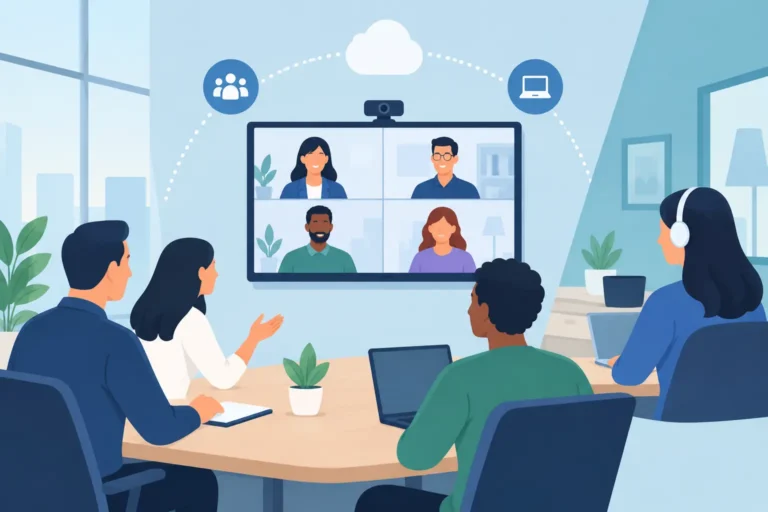
For hybrid and remote audiences, translated captions can add another layer of accessibility. Participants who do not need a full audio interpretation channel may prefer to read translated text while following the original speaker. This can be particularly practical for webinars, virtual town halls, and internal updates with a distributed workforce.
The production requirements still deserve attention. Clear source audio, disciplined microphone use, stable connectivity where required, and language configuration all affect the result. A presenter speaking away from the microphone, several people talking at once, or strong room noise can reduce recognition accuracy before translation even begins. AI is not a set-and-forget feature. It needs event-ready audio design, testing, and active technical oversight.
Where Human Interpreters Remain Essential
Human interpreters are the preferred choice when every nuance carries consequences. This includes diplomatic discussions, legal or regulatory sessions, investor communications, executive negotiations, medical content, sensitive HR meetings, and high-profile media briefings. In these settings, a mistranslated figure, a missed qualification, or an inaccurate response can affect trust and decision-making.
They are also better suited to speakers who depart from their scripts. Live panels often involve interruptions, humor, regional expressions, acronyms, and references to previous remarks. Skilled interpreters can resolve incomplete sentences and preserve the relationship between a speaker and the room. AI may render the literal phrasing while missing the intended meaning.
Technical subject matter requires similar care. In engineering, finance, pharmaceuticals, energy, defense, or specialized manufacturing, terminology can be precise and context-dependent. Professional interpreters prepare with agendas, presentations, terminology lists, and speaker notes. That preparation allows them to maintain consistent terminology throughout a multi-day program.
There is an audience-experience consideration as well. Delegates at a leadership summit or ministerial conference expect a natural listening experience. A trained simultaneous interpreter can preserve pacing and emphasis, helping the translated channel feel like part of the event rather than an added utility. For high-stakes sessions, this level of confidence is often worth the investment.
Accuracy Is Not the Only Decision Factor
Organizers often frame the choice around accuracy alone, but the best solution also depends on latency, privacy, scale, and resilience. AI translation may introduce a short delay while it processes speech. In casual settings this is usually manageable. During tightly timed keynote presentations or interactive Q&A sessions, even a slight lag can affect audience rhythm.
Privacy needs careful evaluation. Organizations should understand where audio is processed, whether content is stored, how attendee data is handled, and whether the selected technology meets internal security requirements. For confidential board meetings, government sessions, or closed commercial negotiations, a human interpretation system with controlled audio routing may be the more appropriate operational model.
Scale can point in either direction. AI can expand language availability quickly, particularly for large and linguistically diverse audiences. Yet a major conference with several rooms, formal language channels, and thousands of delegates may still require a complete simultaneous interpretation infrastructure: interpreter booths, infrared or digital receivers, distribution equipment, technician support, and spare units for continuity.
Reliability is built through planning, not through a single product choice. The event team should confirm venue acoustics, room layouts, Wi-Fi capacity, network separation, speaker microphone positions, headset quantities, interpreter working conditions, and a backup plan for critical sessions.
A Hybrid Model Often Delivers the Best Result
The choice does not have to be all AI or all human. Many event programs benefit from a hybrid language strategy that matches each format to the right service level.
A plenary session with executive speakers may use professional simultaneous interpreters in the core languages. Breakout rooms can offer AI translation or translated captions for broader accessibility. Exhibition tours can use portable tour-guide systems with live interpretation when necessary, while less formal product stations use AI-enabled attendee devices. Recorded sessions can be captioned and translated after the event for on-demand viewing.
This approach directs budget toward the moments where human interpretation has the greatest value, while extending access across the wider program. It also avoids forcing every attendee into the same experience. A delegate may choose Arabic interpretation for a keynote, English original audio for a panel, and Spanish captions for a workshop.
For production teams, the hybrid model requires clear communication before event day. Each room needs a defined language plan, including source language, target languages, delivery method, user instructions, and technical ownership. Attendees should know whether to collect a receiver, scan a code, access a platform, or select a channel on their device. Simple instructions reduce support requests and prevent missed content at the start of a session.
How to Select the Right Solution for Your Program
Start with the consequence of an error. If a misunderstanding could create legal, financial, reputational, or diplomatic risk, use qualified human interpreters for that session. If the goal is broad understanding during a lower-risk presentation or tour, AI translation may be a practical and cost-effective fit.
Next, assess the speakers. Prepared keynote speakers using clear microphones are well suited to AI-supported translation. Fast-paced panels, unscripted debate, strong accents, overlapping discussion, and specialized terminology favor human interpreters. Ask presenters for slides and scripts in advance regardless of the approach. Better inputs lead to better language delivery.
Then look at the attendee journey. Are delegates seated in a conference hall, moving between exhibition stands, joining remotely, or participating in several simultaneous breakouts? The delivery method should match their environment. Dedicated interpretation headsets offer focused, reliable listening in formal sessions. Mobile-based AI tools can be convenient for flexible and decentralized event formats, provided the connectivity plan supports them.
Finally, plan for operation rather than equipment alone. Multilingual event communication involves audio capture, language routing, device management, technical testing, live troubleshooting, and end-of-day logistics. An experienced technical partner can configure the package around the venue, agenda, and languages rather than treating translation as a standalone add-on.
DLC Events supports both AI speech translation and professional conference interpretation systems as part of tailored event technology rental packages. For a one-room executive meeting or a multi-venue international summit, the practical objective is the same: every participant should be able to hear, understand, and respond with confidence.
Choose the language solution that protects the meaning of the conversation and fits the reality of your event. The best multilingual setup is the one your attendees barely have to think about.