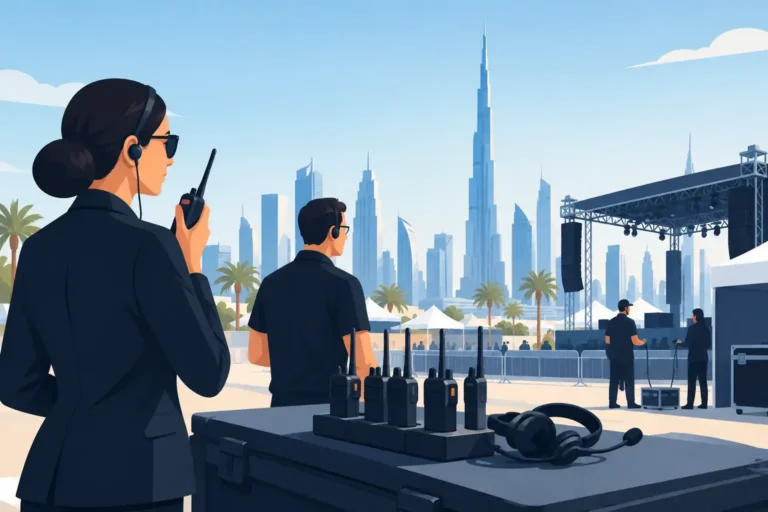
A radio failure rarely looks dramatic at first. A stage manager cannot reach the loading dock. Security receives a guest-flow update too late. A breakout room changes schedule, but the technical team is still working from the previous plan. On a busy event site, small communication gaps can quickly become operational delays. Event radio licensing is what allows organizers to use professional two-way communications confidently, legally, and with the right level of control.
For conferences, exhibitions, government gatherings, corporate launches, and live productions in Dubai and across the UAE, radio use is not simply an equipment decision. It involves frequency authorization, approved equipment, coverage planning, and practical on-site coordination. Working with a licensed communications provider helps ensure that the radio system supporting your event is fit for purpose before the first delegate arrives.
Why Event Radio Licensing Matters
Two-way radios operate on regulated radio frequencies. In the UAE, the Telecommunications and Digital Government Regulatory Authority, or TDRA, oversees the use of radio spectrum. Event organizers should not assume that commercially available radios can be brought into a venue, switched on, and used on any available channel.
Licensed radio communications provide an assigned and managed operating framework. This reduces the risk of interference with other users and helps protect critical event communications from avoidable disruption. It also gives production teams a clearer structure for who communicates with whom, on which channel, and for what purpose.
At a large summit, for example, the operations desk, audiovisual crew, venue security, registration team, VIP handlers, and transport coordinators may all need instant communication. Without channel discipline, messages overlap and urgent calls can be missed. A properly planned radio deployment separates these groups while keeping key supervisors connected across the operation.
The requirement is particularly relevant for events that use radios across multiple days, several meeting rooms, exhibition halls, outdoor activation areas, hotels, or temporary venues. The larger and more complex the footprint, the more valuable professionally coordinated radio communications become.
What a Licensed Event Radio System Includes
Event radio licensing is part of a wider operational solution, not a standalone document handed to the organizer. The right package begins with the event plan: venue layout, team size, working areas, program complexity, expected attendance, and the departments that need direct contact.
A managed deployment can include TDRA-licensed two-way radios, assigned channels, batteries, charging stations, earpieces, speaker microphones, and radio accessories suited to each role. A floor manager may need a discreet earpiece for a corporate conference, while a loading-bay coordinator may require a speaker microphone and durable radio for a fast-moving technical setup.
The system also needs practical configuration. Teams should receive clear call signs, channel assignments, and a short radio protocol before operations begin. This avoids common problems such as all departments using one channel, lengthy nonessential calls, or unclear escalation when a technical or safety issue arises.
For major programs, the communications plan may sit alongside show intercom, conference systems, interpretation services, lighting control, and professional audio. Radios handle mobile operational communication. Intercom supports dedicated production positions, such as show calling, camera, audio, and lighting. These systems serve different purposes, and combining them correctly creates more reliable control across the event.
When Do You Need Event Radio Licensing?
The practical answer depends on the type of equipment, the frequency spectrum used, where the radios will operate, and the local regulatory requirements. In the UAE, event teams should treat radio authorization as a planning item rather than an afterthought.
You are likely to need a licensed solution when communications are mission-critical, when you are operating professional radios at a venue or event site, or when multiple teams require coordinated channels. This commonly applies to conferences, exhibitions, outdoor events, film shoots, sports activations, government events, and multi-venue corporate programs.
Short-range consumer devices may appear convenient for small teams, but they are not always appropriate for professional operations. Their range can be inconsistent in reinforced concrete venues, hotel ballrooms, exhibition halls, or outdoor sites with physical obstructions. They may also lack the audio accessories, battery management, channel structure, and support needed during a high-pressure event.
A licensed rental provider can assess the operational requirement and supply an appropriate radio package. This approach is usually more efficient than purchasing equipment for occasional use, then managing authorization, programming, maintenance, storage, and staff training internally.
Planning Radio Communications Before Event Day
Radio planning should begin as soon as the event footprint and operating schedule are defined. Last-minute requests are possible in some cases, but early planning provides more time to confirm requirements, prepare equipment, and coordinate with the venue and other production suppliers.
Start by identifying the teams that genuinely need radios. Giving radios to every staff member can create unnecessary traffic and make it harder for critical calls to get through. Most events benefit from issuing units to team leads, operational coordinators, technical heads, security supervisors, registration managers, transport coordinators, and key client representatives.
Next, consider where communications must work. A radio system for a single ballroom differs from one covering a conference center, exhibition floor, backstage areas, parking zones, hotel entrances, and off-site transport routes. Site surveys and venue knowledge help determine the likely coverage needs and any operational limitations.
It is also useful to define an escalation path. A registration query may go to the registration lead, while a medical concern, security incident, technical failure, or speaker movement change should follow a clearly understood route. Radio communication works best when teams know both how to speak and when to escalate.
A Simple Channel Structure
For many corporate events, a practical channel structure includes one channel for overall operations, one for technical production, and one for security or venue coordination. Larger events may add channels for registration, transport, VIP movement, exhibition operations, or individual halls.
The exact structure should match the event, not a generic template. A two-room leadership meeting may require only a small number of radios and channels. A multi-day international congress may require a coordinated fleet, spare units, charging management, and on-site technical support.
Common Mistakes That Affect Radio Operations
The most common error is treating radios as a last-minute purchase rather than a managed event system. This can lead to incorrect quantities, unsuitable accessories, weak battery planning, or channels that do not reflect the actual command structure.
Another issue is poor radio etiquette. Teams should keep calls short, identify who they are calling, wait for a response, and move detailed conversations off the main channel when necessary. Clear communications are especially important during speaker walk-ons, live sessions, emergency responses, and venue changeovers.
Battery management also deserves attention. A full event day can be long, and radio units need charged batteries, labeled charging stations, and a process for issuing and collecting equipment. Spare batteries may be appropriate for extended programs, outdoor activations, and teams working long shifts.
Finally, organizers should avoid mixing radio communications with show intercom without a clear plan. A stage manager may need access to both systems, but the general operations team does not necessarily need production intercom traffic. Separate systems, correctly configured, prevent unnecessary noise and keep each workflow focused.
Why Managed Radio Rental Is Often the Better Choice
Owning radios can make sense for organizations with frequent, consistent operational requirements and trained internal teams. For many event organizers, however, rental is more practical. Requirements change from one program to the next, and an exhibition may need a different radio count, accessory mix, and coverage plan than a board meeting or product launch.
A managed rental package provides current equipment without the capital expense, storage burden, repair responsibility, or administrative effort of maintaining an in-house fleet. It also gives organizers access to technical advice when the event plan changes.
DLC Events supplies TDRA-licensed radio communications as part of tailored event technology packages, supported by experienced crews who understand the pace and constraints of UAE event operations. The goal is not simply to hand over radios. It is to give every operational team a dependable way to coordinate when timing matters.
The most effective radio plan is usually the one attendees never notice. Speakers arrive on cue, rooms turn over smoothly, technical teams receive the right instruction, and event leaders remain informed without creating disruption. Build communications planning into your production schedule early, and your team can focus less on chasing updates and more on delivering the event.