A keynote can have an exceptional message and still lose the room if the first rows hear every word while the back rows hear only echoes. That is why professional audio rental is not simply a matter of placing loudspeakers around a venue. It is a planned communication system that gives speakers confidence, keeps audiences engaged, and supports the pace of a live program.
For conferences, corporate meetings, exhibitions, product launches, and international summits, audio requirements are shaped by much more than attendee numbers. Room geometry, ceiling height, presentation format, audience seating, video playback, interpretation requirements, and the number of concurrent sessions all affect the right system. A reliable rental partner evaluates those details before equipment arrives on site.
What Professional Audio Rental Should Deliver
The objective is clear, natural sound throughout the event space. For speech-led events, intelligibility matters more than sheer volume. Attendees should hear a presenter without strain, whether they are seated beside the stage, at the rear of a ballroom, or in an overflow area.
A complete system typically combines microphones, loudspeakers, mixing and signal-processing equipment, playback sources, recording options, and technical operation. The exact package depends on the program. A board meeting may require discreet tabletop microphones and a compact sound system, while a large plenary session may need wireless handheld and lapel microphones, stage monitors, distributed speaker coverage, playback control, and backup channels for critical speakers.
Professional systems also help maintain control. A trained audio technician can manage microphone levels, video playback, walk-on music, panel discussions, Q&A sessions, and unexpected changes to the run of show without distracting the audience. This operational support is particularly valuable when event teams are managing VIP arrivals, content approvals, sponsor commitments, and timing pressure at the same time.
Start With the Event, Not the Equipment List
The most effective audio plan begins with how people will communicate during the event. A product launch with a single presenter has different demands from a leadership summit with six panelists, remote contributors, and live interpretation. Listing equipment before defining the event flow often leads to gaps, unnecessary costs, or last-minute changes.
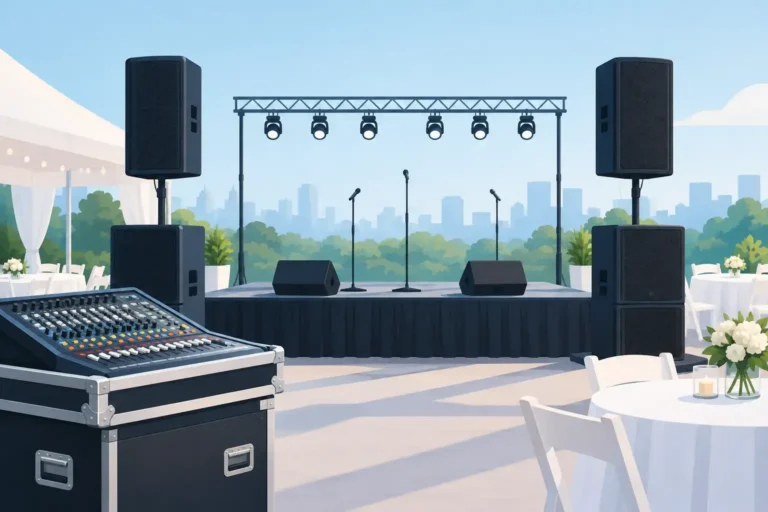
Consider the venue first. Hotel ballrooms can create reflections that reduce speech clarity, while exhibition halls often have high ceilings, ambient noise, and open boundaries between stands. Outdoor events introduce wind, environmental sound, power distribution, and greater speaker coverage challenges. In each case, the system should be designed for predictable coverage rather than relying on volume alone.
Next, assess the program. Will presenters move freely across a stage? Will there be audience questions? Is video content central to the agenda? Are there multiple breakouts running at once? A wireless lapel microphone may suit an executive presentation, but a handheld microphone is often more dependable for audience Q&A. For panel discussions, gooseneck microphones or conference discussion systems can provide better control than passing handheld microphones between speakers.
Finally, define what cannot fail. Opening remarks, ministerial addresses, shareholder communications, award announcements, and recorded sessions may require redundant microphones, backup playback devices, dedicated audio feeds, or isolated recording. The level of contingency should match the consequence of interruption.
Microphone Selection Changes the Audience Experience
Microphones are often the most visible part of an audio setup, and the wrong choice can affect both sound quality and presentation style. Wireless lapel microphones keep speakers hands-free and work well for presenters who move across the stage. Wireless handheld microphones suit lively presentations and Q&A, while headset microphones can provide consistent pickup for active presenters, fitness demonstrations, or training sessions.
For formal meetings, tabletop delegate microphones create an orderly speaking process and can integrate with conference management and simultaneous interpretation systems. This is especially useful for government forums, annual general meetings, diplomatic sessions, and multilingual conferences where each participant needs a defined microphone position.
Wireless frequency coordination is also a practical consideration. In busy venues and dense urban areas, multiple wireless systems must be planned carefully to avoid interference. Working with an experienced technical provider helps ensure approved, coordinated equipment is used and that frequency planning is completed before doors open.
When a Basic PA System Is Not Enough
A basic public-address system can work for simple announcements in a small room. It is not always the right solution for events where speech clarity, brand presentation, or production timing are critical. The distinction becomes clear when multiple audio sources must work together.
For example, a corporate town hall may include a host, executive speakers, remote video contributors, pre-produced videos, walk-on music, interpreted audio, audience questions, and a live recording feed. Each source needs appropriate routing, level control, and monitoring. If a remote participant speaks over a video call, the system must prevent feedback while ensuring the room and the remote caller can hear each other clearly.
Hybrid events add another layer. Audio for the room is not automatically suitable for the online audience. Virtual attendees need a clean mix of microphones, presentation audio, and remote contributors. Relying on a camera microphone or room speaker pickup can produce distant, echoing sound that undermines an otherwise polished broadcast. A dedicated audio mix for streaming or recording is often the better approach.
Professional Audio Rental for Multilingual Events
International conferences require audio systems that support every participant, not only those listening in the main room language. When simultaneous interpretation is part of the program, the audio design must connect floor microphones, interpreter consoles, language distribution, and attendee receivers or silent headsets.
The quality of the original floor audio directly affects interpreters. If a speaker is too far from a microphone, if panel microphones are inconsistent, or if video sound is poorly routed, interpreters have less usable material to work with. Careful audio planning protects the full multilingual communication chain.
This is where integrated event technology offers a practical advantage. Rather than treating interpretation, conference microphones, and room audio as separate services, the system can be planned as one workflow. Speakers are heard in the room, interpreters receive a stable floor feed, delegates select their language channel, and the technical team manages the operation from a coordinated control position.
Planning for Scale, Support, and Change
Rental provides flexibility that ownership rarely offers. A company may need a compact setup for a quarterly meeting, then a much larger system for an annual regional summit. Renting allows organizers to select the right capacity for each event without carrying equipment maintenance, storage, upgrades, and specialist staffing between programs.
However, flexibility still requires early planning. Share the agenda, venue plans, attendee count, seating layout, presentation requirements, language needs, and production schedule with the technical team as soon as possible. This allows time for a site survey where needed, equipment allocation, frequency planning, crew scheduling, and coordination with venue teams.
For larger events, audio rental should also account for load-in access, rigging restrictions, power availability, control-position location, and rehearsals. An excellent system can still be compromised if there is no clear route for cable runs, no approved place for speakers, or insufficient time for sound checks. A technical production schedule should protect time for setup, testing, presenter briefing, and contingency adjustments.
DLC Events supports this process with tailored professional audio packages, technical setup, on-site operation, troubleshooting, and logistics for events across the UAE, GCC, and international locations. The goal is not to overload an event with equipment. It is to provide the right system, correctly deployed, with experienced support available when the program is live.
Questions to Settle Before Confirming Your Audio Package
Before approving a rental scope, confirm the number and type of speakers, whether audience participation is planned, the audio needs for video and remote contributors, and whether sessions will be recorded or streamed. It is also useful to identify VIP speakers, simultaneous interpretation requirements, and any venue restrictions early.
Ask who will operate the system during the event. A self-operated package may be suitable for a straightforward internal meeting, but complex conferences benefit from a dedicated audio engineer. The trade-off is clear: reducing crew costs can make sense for a low-risk session, while professional operation provides greater assurance when timing, content, and reputation are on the line.
Clear sound does more than make an event louder. It allows a message to carry with authority, gives every attendee a fair listening experience, and lets organizers focus on the program rather than the next technical concern. Build the audio plan around the conversations your event needs to create, then give those conversations the system and support they deserve.