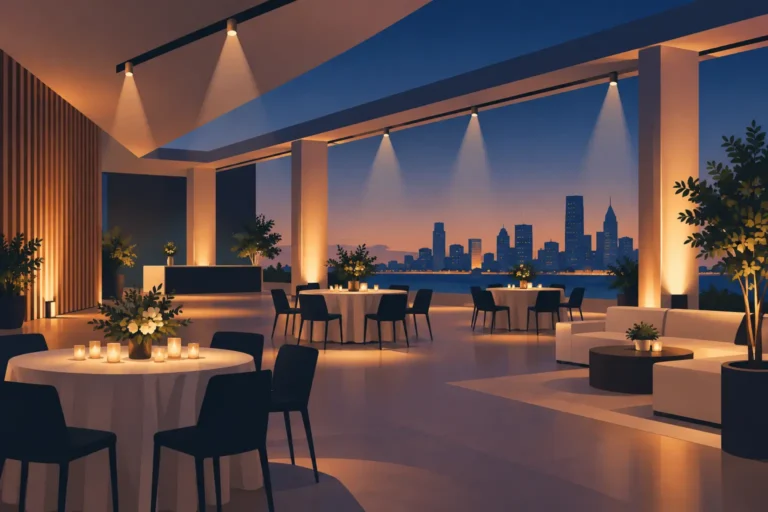
A ballroom with excellent screens, sound, and staging can still feel unfinished if its walls disappear into darkness. Architectural lighting changes that. It uses light to reveal the character, scale, and structure of a venue, turning ceilings, columns, entrances, textures, and exterior facades into active parts of the event environment.
For conferences, launches, gala dinners, summits, and exhibitions, the result is not simply a brighter room. It is a venue that feels designed around the audience experience and the brand behind it. The right approach can make a standard hotel ballroom feel premium, help guests navigate a large exhibition floor, and create a consistent visual identity from registration through to the final presentation.
What Architectural Lighting Does at an Event
Architectural lighting is the planned illumination of permanent or temporary built features. In an event setting, this commonly includes uplighting on walls and columns, controlled washes across drape or scenic surfaces, pin spots for tables and centerpieces, lighting for truss-supported structures, and exterior illumination for arrival areas.
It differs from stage lighting because its main job is not to light a speaker or create a concert effect. It establishes the visual atmosphere around the program. Stage lighting directs attention toward presenters, performers, and content. Architectural light gives the room depth, scale, and a sense of purpose before the first speaker walks on stage.
That distinction matters during corporate events. A projection screen may be technically visible, but a room lit only by general house lights can look flat on camera and unconsidered in person. A carefully balanced lighting plan supports the stage without competing with it, keeps audience areas comfortable, and gives photography and video teams a more controlled setting.
Start With the Venue, Not the Fixture List
The most effective lighting plans begin with a site assessment. Fixture selection should follow the venue’s physical conditions, event format, program schedule, and brand requirements. A lighting package that works well in a black-box hall may not be suitable for a glass-walled conference venue, an outdoor courtyard, or a ballroom with low ceilings.
Ceiling height affects beam angles, fixture placement, and the intensity needed to reach upper surfaces. Wall finishes also matter. White surfaces accept color evenly, while dark wood, mirrors, patterned stone, or fabric can absorb, scatter, or reflect light in unexpected ways. In a venue with reflective finishes, a strong uplight can cause glare for seated guests or interfere with camera angles.
Power distribution and cable routes must be evaluated early, particularly for multi-room conferences and exhibitions. Wireless fixtures can reduce visible cabling and speed up installation, but they still require a charging, control, and placement plan. In some venues, wired fixtures offer the most consistent choice for long operating hours or complex programming. The practical answer depends on the room, the schedule, and access for the technical crew.
For outdoor events in Dubai and across the GCC, heat, wind, dust, and installation timing are equally relevant. Equipment must be suited to its operating environment, and the design needs to account for changing ambient light at sunset. A facade treatment that appears subtle at 6:00 p.m. may look completely different after dark.
Build the Lighting Plan Around the Event Journey
Guests do not experience an event as a single room. They move from arrival to registration, networking, seating, presentations, catering, and departure. Lighting should support each point in that journey.
At the entrance, architectural lighting can establish arrival and reinforce the event identity. Branded colors can be used with restraint on columns, facade features, registration counters, or scenic backdrops. For executive and government events, the objective is often refined and formal rather than highly animated. Consistent color temperature, controlled brightness, and clean fixture placement usually deliver a stronger result than effects used for their own sake.
Within the main room, the lighting must support several modes. Guests need enough ambient light to find seats, read notes, and speak comfortably during networking. The audience can be dimmed during presentations, but not so far that the space becomes visually empty in wide camera shots. When meal service begins, table lighting and room washes may need to change again.
Breakout rooms deserve the same attention. A uniform, functional look is often appropriate for training workshops and technical meetings, while leadership forums or sponsor sessions may benefit from brand-color accents that connect them to the main conference environment. Control systems allow these looks to be recalled quickly, helping the production team move between program segments without disruption.
Color Is a Branding Tool, Not a Default Setting
Color can make an event recognizable, but it should be used with a clear purpose. A company’s primary blue may look polished on a white wall yet become overly saturated on gold drape. Red can create energy for a product reveal, but it may be unsuitable for an extended conference session where attendees need to take notes, interact, and remain comfortable for several hours.
A useful lighting design usually has a neutral base, a controlled brand-color layer, and a limited number of moments for emphasis. The neutral base maintains flattering light for people and preserves the quality of video and photography. Brand colors can then define perimeter areas, scenic features, or transitions between agenda sessions. Stronger changes should be reserved for walk-ons, award announcements, product reveals, or evening entertainment.
Color temperature also has an operational impact. Warmer white light tends to suit dinners, hospitality areas, and premium social settings. Cooler white light can feel clean and focused for daytime conferences, exhibitions, and technology demonstrations. Mixing color temperatures without planning can make a room look inconsistent, especially on broadcast cameras.
Coordinate Lighting With Screens, Cameras, and Audio
Architectural lighting cannot be designed in isolation. It shares the room with LED walls, projection screens, cameras, microphones, scenic elements, and sometimes simultaneous interpretation booths or delegate units. Each system has its own requirements, and the best results come from planning them together.
Projection is particularly sensitive to ambient light. Bright wall washes near the screen can reduce contrast and weaken presentation content. LED displays are less affected, but their brightness may require adjustment to prevent them from overpowering the room. The lighting programmer and video team should test content, camera framing, and audience visibility during rehearsal rather than relying on a design rendering alone.
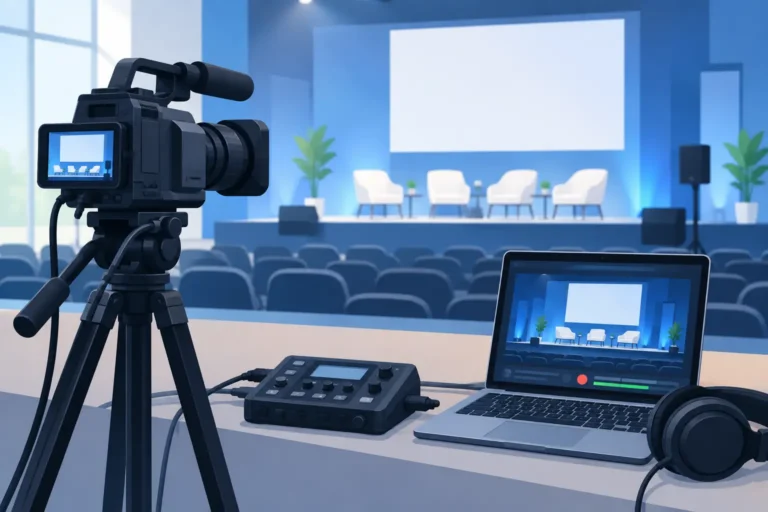
For filmed events, lighting must also consider skin tones, reflections on lecterns, and light spill onto screens. A speaker may look well lit from the audience perspective but appear uneven on camera if architectural fixtures are aimed poorly. Camera positions should be confirmed before final focus, especially at hybrid events where remote viewers need the same level of visual clarity as the in-room audience.
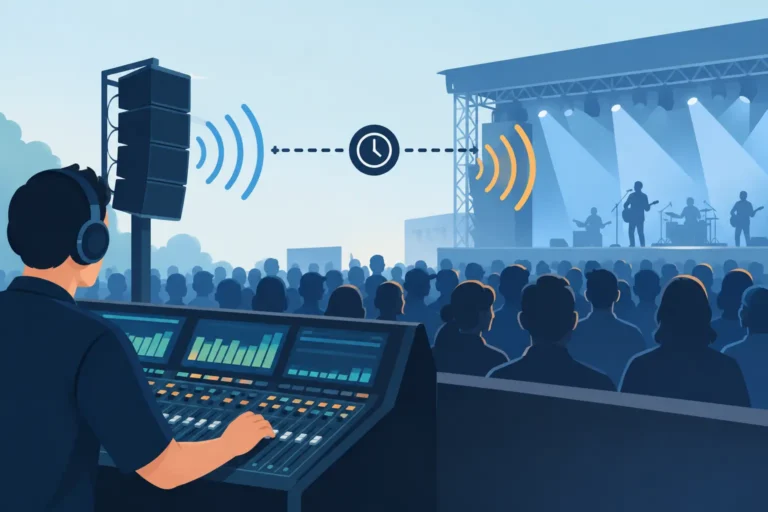
Audio is part of the coordination process too. Fixtures, stands, and cables should never block sightlines, access routes, emergency exits, or loudspeaker placement. Technical production is most reliable when lighting, audio, video, scenic, and conference systems are managed as one event infrastructure plan.
Rental Gives Organizers More Control Where It Counts
For most event organizers, buying architectural lighting is rarely the efficient option. The equipment requires storage, transport, maintenance, charging, programming knowledge, and experienced operators. It also needs to scale differently for a 60-person board meeting, a multi-track summit, or a large exhibition opening.
A professional rental package can be configured for the venue and schedule, then supported by technicians who handle installation, focusing, programming, live operation, and strike. This allows organizers to access current intelligent wireless lighting and control equipment without carrying the long-term ownership burden.
DLC Events approaches lighting as part of the wider technical production requirement. That is valuable when a program also needs conference microphones, digital name signs, interpretation systems, professional audio, show intercoms, or live-event communications. One coordinated technical team reduces handoffs, clarifies responsibility, and helps ensure that the visual environment supports the event’s operational goals.
Questions to Settle Before Production Begins
A clear brief saves time during setup and avoids last-minute compromises. Confirm the event objectives, venue access times, room dimensions, preferred brand colors, agenda changes, camera requirements, screen locations, and the expected number of guests. If the room will turn over from daytime conference sessions to an evening dinner or awards program, identify that transition early.
It is also worth deciding who has final approval over lighting looks during the event. Corporate marketing teams may prioritize strict brand alignment, while production teams need authority to make practical adjustments for visibility, safety, and camera performance. A rehearsal gives both groups the opportunity to review the room under real conditions.
The best architectural lighting is noticed first as a feeling: the venue seems more polished, the brand feels present without being forced, and guests know where to look and where to go. Bring the lighting conversation into the earliest venue and production discussions, and it can become one of the most effective tools for making an event feel fully considered.