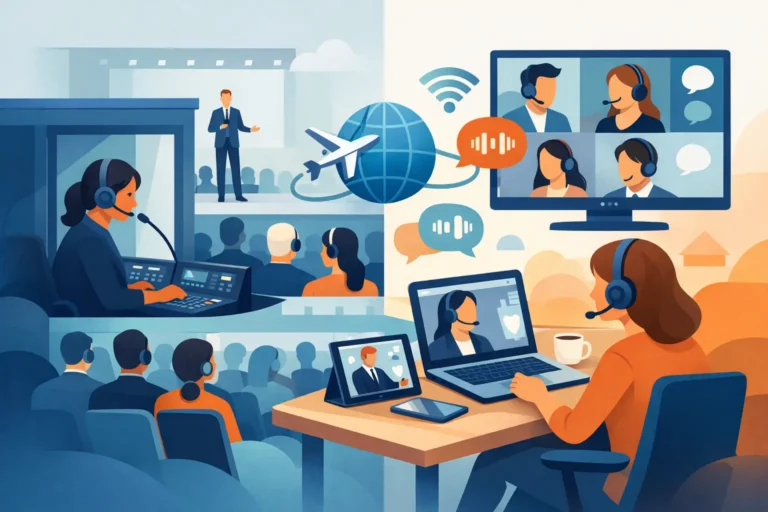
A minister changes a key figure during a live panel. A CEO answers an unscripted audience question. Delegates in the room, on an overflow feed, and online all need the message in their own language at the same moment. The future of event interpretation will be defined by how well event teams handle these real-world moments, not by how many new features appear on a platform.
For conferences, summits, and high-level corporate meetings, interpretation is moving from a standalone service to a coordinated communication environment. Professional interpreters remain central, while AI speech translation, remote participation, digital scheduling, and smarter audio distribution expand what organizers can deliver. The opportunity is significant, but only when technology is selected around the event format, language risk, venue conditions, and audience expectations.
The Future of Event Interpretation Is Not One Technology
There is no single replacement for simultaneous interpretation. Instead, organizers are building flexible language strategies that combine different delivery methods. A large international summit may require interpreter booths, infrared or digital receivers, and dedicated technical operators in the main hall. A training session with participants joining from several countries may benefit from remote interpreters and platform-based language channels. An exhibition tour may need portable tour-guide systems rather than a full conference setup.
The right approach depends on the consequences of getting the message wrong. Legal, financial, diplomatic, medical, and executive communications demand the accuracy, context awareness, and discretion of qualified human interpreters. A product demonstration or internal briefing may have more room for AI-supported translation, especially when speed and broad language coverage matter most.
This distinction matters because translation quality is only one part of the attendee experience. Delegates also need clear audio, simple receiver distribution, visible language selection, dependable connectivity, and support when something changes on site. Interpretation technology must work as part of the full event operation.
Human Interpreters Will Remain the Standard for High-Stakes Content
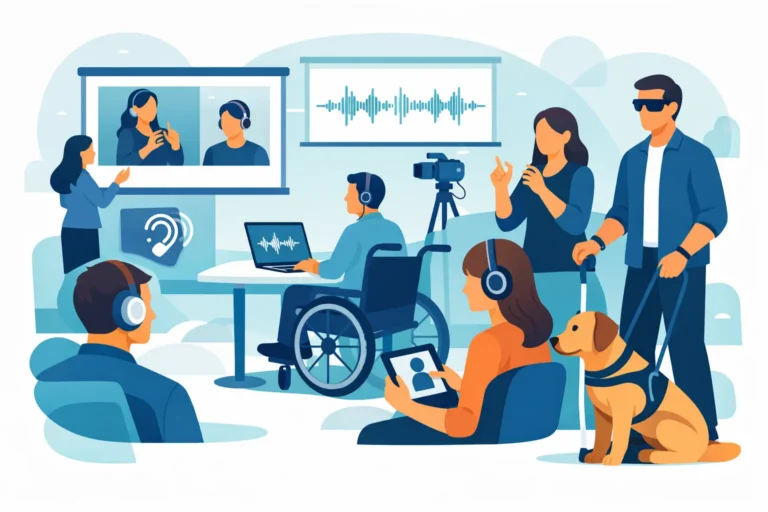
AI has improved rapidly in speech recognition, transcription, and real-time translation. It can help organizers offer more language options, provide captions, create post-event transcripts, and support attendees who would otherwise have no translation access. For suitable formats, it can make multilingual communication more practical and cost-effective.
But spoken language at events is rarely clean or predictable. Speakers use industry terminology, regional accents, abbreviations, jokes, incomplete sentences, and references to slides that may change minutes before a session. A skilled interpreter reads intent, corrects for ambiguity, and adjusts tone for the audience. That capability is particularly valuable when a speaker is negotiating, announcing policy, presenting sensitive results, or responding under pressure.
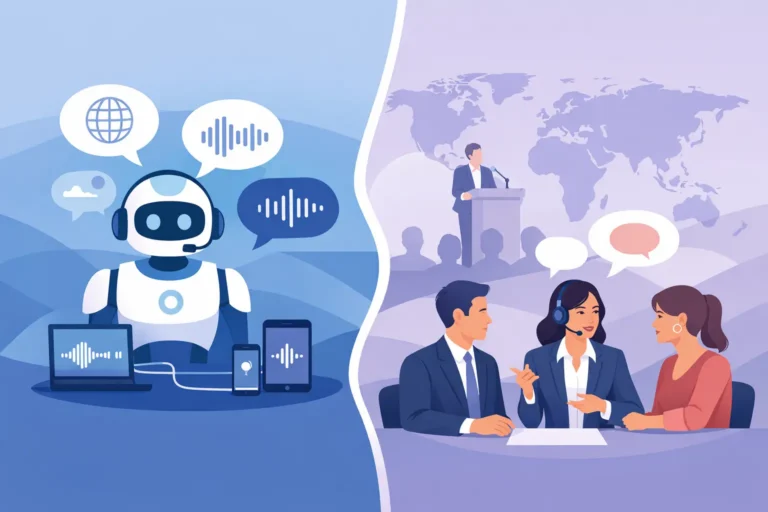
The strongest model is often human-led with AI support. AI can provide live captions for accessibility, preliminary translation for lower-risk language channels, searchable transcripts, or terminology preparation. Professional interpreters can handle the languages, sessions, and moments where nuance cannot be compromised. This is not a contest between people and software. It is a decision about where each delivers the best event outcome.
Accuracy Requires Preparation, Not Just Equipment
Even the best interpretation system cannot compensate for poor preparation. Interpreters need agendas, speaker notes, presentation decks, approved terminology, names, and acronyms before the event. Event teams should also confirm whether speakers will present in languages other than the primary program language and whether panel discussions will allow audience questions.
For AI speech translation, preparation includes testing vocabulary, microphone technique, audio routing, and the expected speaking pace. If a session includes technical product terms, Arabic and English brand names, or multiple accents, test that content rather than relying on a generic demonstration. A controlled rehearsal identifies problems before delegates are wearing headsets in a packed room.
Interpretation Will Reach Beyond the Main Conference Room
The traditional model placed interpreters in booths at the back of a ballroom and distributed receivers to delegates. That model remains effective for many formal conferences. Yet multilingual communication now extends to breakout rooms, press areas, VIP tours, backstage briefings, remote speakers, and on-demand recordings.
This creates a need for systems that can scale by session and location. A multi-room summit may need separate discussion microphone systems and interpretation channels in each room, with centralized technical control. A hybrid program may need a remote interpretation feed integrated with the event platform while in-room attendees use digital receivers. A site visit may require portable transmitter and headset systems that work clearly in a moving group.
The practical question is not whether an event is in-person or virtual. It is where communication happens, how quickly attendees move between spaces, and whether every participant can access the correct language channel without assistance. Those details determine the equipment package, network design, staffing level, and contingency plan.
Audio Quality Is the Foundation of Every Language Channel
Interpretation begins with a clean source signal. If the interpreter receives distorted audio, excessive room noise, low microphone levels, or a speaker who turns away from the lectern microphone, the translated channel will suffer immediately. The same is true for AI translation systems, which rely on clear speech recognition.
That is why interpretation planning should be coordinated with the professional audio design. Lectern microphones, panel microphones, wireless handhelds, headsets, playback sources, video feeds, and remote caller audio all need defined routing. Technical teams should confirm what the interpreter hears, what the audience hears, and what is being sent to remote participants. These are related signals, but they are not always the same.
Redundancy is also becoming more valuable. For a high-profile event, organizers may require backup receivers, spare headsets, additional charging capacity, alternate audio paths, and technical staff positioned for rapid support. A lower-risk internal meeting may use a simpler configuration. The level of resilience should match the importance of the program, not an arbitrary equipment list.
Remote Interpretation Expands Access but Raises Operational Questions
Remote interpretation can bring specialized language talent into an event without requiring every interpreter to travel. It is particularly useful for hybrid meetings, dispersed teams, or programs with less common language combinations. It can also provide greater scheduling flexibility when sessions are short or spread across multiple days.
However, remote delivery depends on disciplined technical planning. Interpreters need stable connectivity, appropriate headsets, a quiet working environment, and access to the same presentation and speaker audio sources as the audience. The event team must define who monitors the remote feed, how delays are managed, and what happens if a connection fails.
For some programs, a remote setup is the most efficient choice. For others, particularly major diplomatic or executive events, on-site interpreters and locally managed equipment provide greater control. Hybrid capability is valuable because it gives organizers options. It should not become an automatic decision to remove the people and systems that protect communication quality.
How Event Teams Should Plan for the Next Generation of Interpretation
The most effective interpretation plans begin early, alongside venue and agenda planning. Start by mapping languages, attendee numbers, room layouts, session formats, and remote participation requirements. Then identify which sessions require professional simultaneous interpretation, which could use AI translation or captions, and which need portable communication systems.
Next, plan the attendee journey. Consider how delegates receive headsets or receivers, how they select channels, where equipment is returned, and how support is provided between sessions. For branded executive events, even receiver desks, signage, and headset presentation contribute to the professional impression.
Finally, build technical support into the scope. Equipment rental gives organizers access to current conferencing technology without the expense of ownership, maintenance, storage, and specialist staffing. For complex programs, an experienced technical partner can coordinate installation, testing, operation, troubleshooting, and logistics across multiple rooms or venues. DLC Events supports this approach with configurable interpretation and conference communication systems backed by on-site technical expertise.
What Will Matter Most
The future of event interpretation will reward organizers who treat language access as a core part of event design. More tools will be available, from AI translation and remote interpretation to digital receivers and integrated conference systems. More choices also mean more responsibility to select the right method for each audience and each message.
When planning your next multilingual event, begin with the conversations that must be understood without hesitation. Build the technology around those moments, test the full communication path, and give every delegate a clear way to participate in the language they trust.