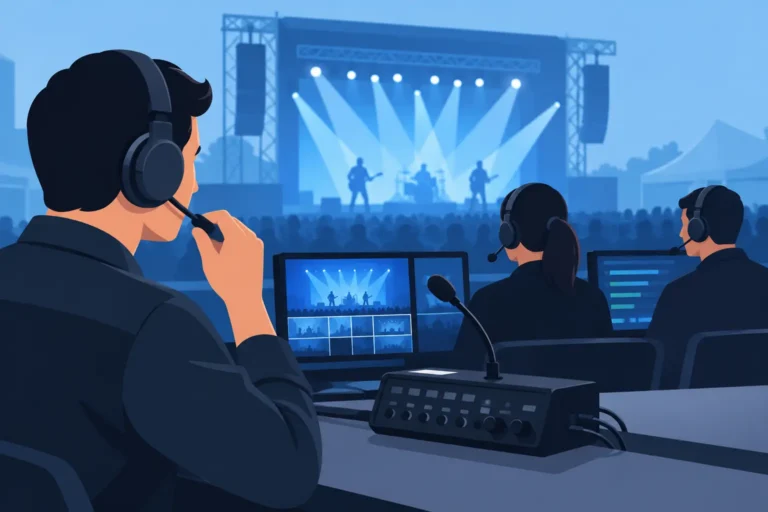
A missed standby call can put a keynote speaker on stage before the opening video ends. A noisy radio channel can delay a camera cue. In high-stakes event production, a production intercom is the communication layer that keeps directors, stage managers, camera operators, audio teams, lighting technicians, and show callers working as one coordinated crew.
For corporate conferences, exhibitions, awards programs, product launches, broadcasts, and live entertainment, intercom is not simply a convenience. It is a control system for people. The right design gives every critical operator a clear way to receive direction, respond quickly, and stay focused while the audience experiences a polished event.
What a Production Intercom Does
A production intercom provides dedicated, real-time communication between production positions. Unlike general two-way radio traffic, intercom is usually organized into private channels or groups for specific operational needs. A show caller may speak to stage management, video, audio, lighting, and playback at the same time, while a camera director speaks only with camera operators and the vision control team.
This separation matters. On a multi-room summit, the main ballroom may need its own show channel, while breakout rooms, registration, interpretation, and venue operations need separate communication paths. Giving every person access to every conversation creates noise, confusion, and missed calls. A properly planned system gives each crew member only the communication they need to execute their role.
Intercom systems can be wired, wireless, or built as a hybrid. They may use belt packs with headsets, wireless packs, desktop panels, rack-mounted base stations, speaker stations, and interfaces that connect to broadcast equipment or radio networks. The best choice depends on the event format, venue layout, crew size, and production workflow.
Start With Communication Roles, Not Equipment
The first question is not whether to use wired or wireless intercom. It is who needs to speak to whom, and when. A channel plan should reflect the actual calling structure of the show.
For a conference with a single stage, the show caller or producer often needs direct communication with the stage manager, audiovisual control positions, teleprompter operator, video playback, lighting, audio, and camera team. The stage manager may also need a separate backstage channel for speaker handling, walk-on cues, and session transitions.
A larger event may require several functional groups. These commonly include show control, cameras and video, stage and backstage, audio and lighting, venue operations, and security or logistics. Not every group must be part of the production intercom. TDRA-licensed two-way radios are often better suited to wider operational teams such as runners, loading dock staff, registration, or floor managers. The key is to define where the intercom workflow ends and radio communication begins.
Before equipment is selected, production teams should confirm:
- The number of users on each channel and whether they need talk and listen access or listen-only monitoring
- Whether operators are fixed at control positions or moving through the venue
- The distance between the control room, stage, backstage areas, breakout spaces, and outdoor locations
- Whether the program includes cameras, broadcast feeds, remote speakers, interpretation, or teleprompter operations
- Which positions need priority or emergency communication during live operation
This planning stage prevents an all-too-common issue: adding channels and devices late in the build because the original system was designed around headcount rather than operating roles.
Wired, Wireless, or Hybrid Intercom?
Wired intercom remains a strong option for fixed technical positions. It provides dependable communication without battery management or concerns about wireless coverage. For a video control room, front-of-house audio position, lighting desk, and playback rack located near one another, wired belt packs and panels can be efficient and cost-effective.
Wireless intercom is essential when people need to move. Stage managers, camera operators, floor directors, roving producers, and backstage teams need mobility without being tied to a cable route. Modern wireless systems can provide full-duplex communication, allowing natural conversation instead of push-to-talk exchanges. However, coverage must be tested in the actual venue, particularly in ballrooms with reinforced walls, exhibition halls with dense temporary structures, or venues operating multiple wireless systems at once.
A hybrid design is frequently the practical answer. Fixed departments use wired stations, while mobile crew members use wireless packs. This approach makes efficient use of equipment while maintaining clear communication across the production team.
Wireless does involve trade-offs. Battery charging, spare battery allocation, RF coordination, and placement of antennas or access points all require attention. For international conferences and high-profile events, these details should be managed by an experienced technical team rather than treated as a last-minute accessory.
Intercom Design for Conferences and Corporate Events
Corporate events have a different communication rhythm from concerts or television studios. Sessions may run across multiple rooms, speakers may arrive with limited rehearsal time, and executive stakeholders expect precise timing with minimal visible production activity.
For a general session, a production intercom should support the live show call from a central control position. The show caller needs to cue walk-ons, videos, lighting looks, microphones, confidence monitors, and camera positions without relying on hand signals or shouted instructions. If the program includes panel discussions, awards, or audience questions, stage management also needs a direct line to the producer for fast adjustments.
Multilingual events add another layer. The intercom channel plan should be clearly separated from simultaneous interpretation and attendee audio systems. Interpreters require program audio and appropriate language distribution, while production staff need operational communication. These systems may interact within the overall technical design, but they should not be confused or combined without purpose.
For hybrid meetings, the production intercom becomes even more valuable. Remote contributors, streaming operators, video engineers, and moderators must coordinate timing across the room and the virtual platform. A delayed cue or unmuted microphone can affect both audiences at once. Clear internal communication supports smoother handoffs between live speakers, remote guests, pre-recorded content, and audience Q&A.
Headsets Matter More Than They Seem
A reliable intercom system can still underperform with the wrong headset. A loud exhibition floor, arena-style ballroom, or outdoor event may require noise-isolating headsets so crew members can hear calls clearly. A quiet conference room may benefit from lightweight single-ear headsets that allow stage managers to remain aware of their surroundings.
Comfort is also operationally important. Technical teams may wear headsets throughout a long rehearsal, show day, and strike. Equipment that is uncomfortable, poorly fitted, or difficult to adjust tends to be removed at the moment it is needed most. Every pack and headset should be labeled by user or position, tested before doors open, and supplied with appropriate charging or spare-battery arrangements.
Why Rental Support Reduces Production Risk
Owning intercom equipment can make sense for organizations with a consistent internal production operation and a stable technical inventory strategy. For many event organizers and agencies, rental is the more practical model. It provides access to the right system size and configuration for each project without carrying the costs of storage, maintenance, firmware management, battery replacement, and specialist preparation.
The value of a managed rental package is not limited to the equipment. It includes pre-event planning, channel allocation, venue assessment, deployment, testing, operator briefing, and on-site troubleshooting. A crew may only need 10 stations for a leadership meeting one week and 60 mixed wired and wireless positions for an international summit the next. Rental allows the system to scale with the event rather than forcing the event to fit a fixed inventory.
DLC Events supports production intercom rental as part of wider event communication and technical production packages, including licensed radio communications, conferencing systems, teleprompters, audio, video control, and multilingual event technology. Coordinating these systems through one technical partner can simplify planning and reduce compatibility issues during setup.
Build Time Into the Show Schedule
Intercom should be commissioned early, not handed out five minutes before rehearsal. Each position needs a call sign or clearly understood role, a channel assignment, headset check, and confirmation that the person knows who is calling cues. The production team should run a communication check before rehearsals, after major room changes, and again before doors open.
The most effective crews also use disciplined talk procedures. Calls should be brief, specific, and directed to the right team. “Stage, standby next speaker” is clearer than an open-ended request to everyone on the channel. During critical sequences, unnecessary chatter should stop so cue calls remain audible.
When planning your next live program, treat the production intercom as part of the event’s operating plan, not a small technical add-on. A clear channel design, correctly matched equipment, and experienced support give your team the confidence to manage every cue when the room is full and there is no second take.