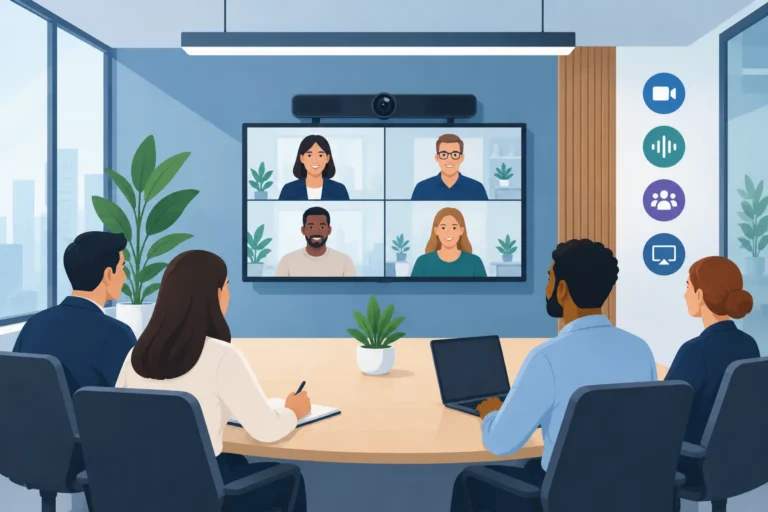
A boardroom microphone that fails during a shareholder address, an interpreter feed that drops during a ministerial panel, or a remote speaker who cannot be heard clearly can change the perception of an entire event. Corporate AV is no longer treated as background infrastructure. It is part of how organizations communicate authority, include international audiences, and keep complex programs moving on schedule.
The most significant corporate AV trends are not about adding technology for its own sake. They reflect a practical shift toward more flexible meeting formats, clearer multilingual communication, stronger production control, and systems that can scale from a small executive briefing to a multi-room regional summit.
Corporate AV Trends Are Becoming More Audience-Focused
For many corporate planners, the starting point has changed. The question is no longer simply, “What equipment do we need?” It is, “What must every participant be able to hear, see, understand, and do?”
That distinction affects every technical decision. A leadership town hall may require confident presentation audio, branded confidence monitors, recording, and a teleprompter for senior speakers. An international conference may need discussion microphones, simultaneous interpretation, digital name signs, and dedicated technical operators. A training session may need reliable remote participation and clear content capture rather than a large-stage production package.
Audience expectations are also higher. Attendees notice poor sound immediately, especially in rooms with challenging acoustics, long panel tables, or mixed in-person and remote participation. They also expect meeting technology to feel easy to use. The best technical design is often the one that supports the agenda without making delegates think about the equipment.
Hybrid Events Are Moving From Backup Plan to Permanent Format
Hybrid programs remain a major factor in corporate event planning, but the definition has matured. Early hybrid events often focused on placing a camera at the back of the room and opening a video call. That may be sufficient for a simple internal update. It is rarely sufficient for an executive summit, product launch, regulated industry meeting, or international forum.
A professionally produced hybrid event considers two audiences at once. Delegates in the room need natural audio, well-positioned screens, and clear visibility of presenters and remote contributors. Online attendees need camera angles that show more than a distant stage, clean program audio, readable presentation content, and a managed experience when questions or panel discussions take place.
The right approach depends on the meeting objective. A two-way strategic workshop requires participants to interact across locations. A large conference may prioritize high-quality broadcast delivery and moderated digital questions. In both cases, the technical plan should identify who can speak, how questions are handled, what content is shared, and how recordings are managed before equipment arrives on site.
Production Control Matters More Than More Gear
Hybrid delivery increases the need for coordinated control. Audio feeds, presentation switching, camera operation, interpretation channels, and remote contributors need to be managed as one production workflow. Adding devices without defining that workflow creates confusion for presenters and unnecessary risk for organizers.
This is where experienced technical crews provide real value. They can test connections, manage show cues, monitor signal paths, and resolve issues without interrupting the meeting. For high-stakes programs, on-site technical support is not an extra convenience. It is part of the event risk plan.
AI Translation Is Expanding Multilingual Access
Multilingual communication is a central requirement across the UAE, Saudi Arabia, and the wider GCC, particularly for government, trade, healthcare, energy, finance, and international corporate events. Simultaneous interpretation remains the preferred solution when accuracy, nuance, confidentiality, and formal proceedings matter most. It gives delegates live access to qualified interpreters through dedicated receiver and headset systems.
AI speech translation is now adding another option to the planning toolkit. It can support live captions, translated text, and broader language accessibility in certain corporate settings. This is especially useful for training sessions, exhibitions, internal communications, and events where attendees speak several languages but do not require formal interpretation in every language pair.
The trade-off is clear. AI translation can improve speed and accessibility, but it should be evaluated carefully for specialized terminology, sensitive content, strong accents, live interruptions, and high-visibility executive messaging. In many cases, a combined model works best: professional simultaneous interpretation for official sessions, supported by AI translation or captions for selected content and attendee touchpoints.
Interpretation Systems Must Be Planned Around the Room
Interpretation is not a system to add at the last minute. The layout affects microphone placement, interpreter booth positioning, receiver distribution, language channel planning, and technical monitoring. A panel with six active speakers has different requirements from a theater-style keynote or a multi-room ministerial summit.
Reliable language delivery also requires disciplined microphone use. Every speaker must be captured clearly at the source. Poor microphone technique, side conversations, or inadequate gain structure can affect both the room audience and the interpretation feed. Planning the communication flow early prevents avoidable problems on event day.
Smarter Conference Systems Are Replacing Manual Administration
Conference discussion systems are becoming more integrated with the way formal meetings are run. Instead of relying on handheld microphones passed around the room, organizers can use delegate units, chairman controls, request-to-speak functions, speaker timers, and voting capabilities suited to the meeting format.
For boards, councils, annual general meetings, and structured forums, these tools improve order and accountability. Conference management software can support attendee registration, agenda control, speaker queues, voting records, and meeting reporting. Digital name signs add a polished, consistent visual layer while helping attendees and cameras identify speakers quickly.
Not every meeting needs the same level of control. A creative workshop may benefit from flexible wireless microphones and a collaborative room layout. A formal assembly may need managed microphone priority, participant identification, and documented voting. The equipment package should follow the governance and engagement needs of the event, not a generic technical checklist.
Wireless Communications Are Being Treated as Core Event Infrastructure
Behind the stage, clear crew communication is one of the most practical corporate AV trends. Large events often involve production managers, stage managers, audiovisual operators, registration teams, security, venue contacts, and client representatives working across separate spaces. Without reliable communication, small changes can become operational delays.
Professional two-way radios and show intercom systems provide structured communications for setup, rehearsals, live sessions, and breakdown. In the UAE, radio communications should also be properly licensed and configured for the operating environment. This is particularly relevant for conferences spread across ballrooms, exhibition halls, outdoor areas, or multiple venue levels.
For delegate movement, site inspections, factory visits, and guided exhibition tours, tour-guide systems and silent headset solutions are increasingly valuable. They allow groups to hear presenters clearly without raising the overall noise level or disrupting neighboring sessions. Silent headset formats can also support concurrent content in the same venue footprint, though they require thoughtful channel management and attendee instructions.
Rental Flexibility Is Driving Better Technology Decisions
Technology changes quickly, but corporate event requirements change even faster. One month may involve a small training room with a presentation screen and wireless microphones. The next may involve a multilingual summit with interpretation, recording, camera coverage, delegate microphones, and several breakout rooms.
For this reason, many organizations are moving away from purchasing specialized event equipment for occasional use. Ownership brings capital expense, storage requirements, maintenance, licensing considerations, compatibility issues, and the need for trained technical staff. Rental allows planners to specify the right system for each venue, audience size, and agenda without carrying those obligations year-round.
DLC Events supports this model with configurable event technology rental packages, technical setup, operation, troubleshooting, and logistics for corporate programs across the UAE, GCC, and international locations. The advantage is not simply access to equipment. It is the ability to build a coordinated system around the event rather than forcing the event to fit a fixed inventory list.
Designing for Reliability, Not Just Visual Impact
Large LED displays, intelligent lighting, and polished staging still matter. They shape how a brand, leadership team, or product launch is perceived. Yet the most successful corporate productions balance visual impact with fundamental reliability.
That means allowing time for site surveys, power planning, signal testing, rehearsals, backup equipment, and speaker briefings. It means confirming sightlines before screen placement, checking wireless frequency conditions, and preparing a fallback plan for remote contributors. It also means recognizing venue limitations early. A visually ambitious concept may need adjustment if ceiling height, rigging permissions, room dimensions, or network conditions do not support it safely.
The best AV plan is therefore not necessarily the largest one. It is the one that gives presenters confidence, protects the audience experience, and gives the production team control when the schedule changes.
Corporate meetings are becoming more connected, multilingual, and production-led, but the objective remains straightforward: people need to receive the message clearly and participate with confidence. Start with that outcome, then choose technology and technical support that can deliver it under real event conditions.