A boardroom presentation can tolerate a minor delay. A multilingual summit with ministers, international delegates, live media feeds, and a packed agenda cannot. Event technology rental Dubai is not simply a matter of selecting equipment from a list. It is the process of building a communication system that fits the venue, audience, program, languages, and pressure points of the event.
For organizers, the right rental partner reduces technical uncertainty before doors open and provides experienced support when the agenda changes on site. That is particularly valuable in Dubai, where major corporate events, government programs, exhibitions, and international conferences often bring together diverse audiences and demanding production requirements.
Start With the Event Outcome
Technology should serve the event format, not dictate it. A leadership meeting may need discreet table microphones, digital name signs, presentation control, and recording. A large congress may require hundreds of delegate microphones, simultaneous interpretation, overflow audio, multiple breakout rooms, and reliable crew communications. An outdoor product launch may place greater emphasis on wireless audio coverage, lighting, show intercom, and radio coordination.
The first planning conversation should establish who needs to hear, speak, see, translate, record, or manage information during the event. It should also identify what happens if a speaker changes rooms, a panel runs over time, or a session needs to be added at short notice. These operational questions determine the system design more effectively than a generic equipment checklist.
Rental is especially practical when requirements vary from one event to the next. It gives organizers access to current professional systems without the capital expense, maintenance cycle, storage requirements, or specialist staffing that ownership demands. The trade-off is that early technical planning matters. Highly specified equipment, large delegate quantities, and peak-season dates should be reserved well ahead of the event.
Match Technology to the Room and Audience
A well-designed event system accounts for more than attendee numbers. Room shape, ceiling height, existing infrastructure, nearby halls, access times, staging, seating layout, and venue power all affect the equipment package and crew plan.
Conference microphones and discussion systems
For formal meetings, summits, council sessions, and shareholder events, conference discussion systems give every participant a controlled way to speak. Chairperson priority functions, voting capability, speaker management, microphone request queues, and language-channel selection can be configured according to the program.
The choice between wired and wireless units depends on the room and level of flexibility required. Wired systems can be ideal for fixed seating plans and long sessions. Wireless discussion units can support rapid reconfiguration, heritage venues, or rooms where cable routing needs to be kept to a minimum. Neither is automatically better. The practical choice depends on setup time, room access, aesthetics, and the level of control required.
Multilingual communication
When the audience speaks more than one language, interpretation must be treated as a core event function rather than an add-on. Simultaneous interpretation systems typically combine interpreter booths, delegate receivers, headsets, infrared or digital distribution, and technical monitoring. The system must be planned around the number of languages, the audience size, room acoustics, interpreter positions, and the need for breakout sessions.
Remote interpretation and AI speech translation can extend language access for selected formats. They can be useful for hybrid meetings, smaller sessions, or fast-changing language requirements. However, they should be evaluated carefully for high-stakes diplomatic, legal, financial, or technical content, where experienced human interpreters and dedicated interpretation infrastructure may be the better fit.
Audio, presentation, and speaker confidence
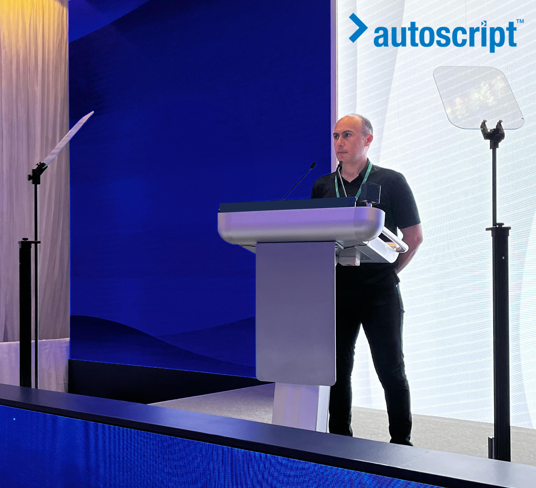
Clear speech is the baseline for any professional event. This may involve lectern microphones, handheld wireless microphones, headset microphones, loudspeakers, audio mixing, playback, recording, and presentation control. Speaker confidence equipment, including teleprompters and digital countdown systems, helps presenters maintain timing and deliver messages accurately under pressure.
A teleprompter is not only for television or keynote stages. It can be highly effective for executive addresses, awards ceremonies, video statements, and launches where wording, pace, and eye line matter. The operator, script format, screen placement, and rehearsal time all need to be considered as part of the production plan.
Plan for Control Behind the Scenes
The audience sees the screen, hears the speaker, and receives the translation. Behind that experience is a technical control structure that keeps multiple teams aligned.
TDRA-licensed two-way radios are an important part of that structure for event operations in the UAE. They allow production, registration, security coordination, venue teams, runners, and show callers to communicate quickly across large sites. Show intercom systems provide a separate, more focused channel for stage managers, audio, lighting, video, and show-control personnel. Using the right communications system prevents production traffic from overwhelming operational teams during critical moments.
For multi-room conferences, conference management software can bring greater visibility to registrations, delegate data, meeting schedules, speaker information, attendance, voting, and reporting. Digital name signs add another layer of professionalism and flexibility, particularly for protocol seating, international delegations, board meetings, and panel sessions where roles or names may change close to show time.
These systems should be specified around the decision-making process on site. Ask who needs control, who needs information, and who needs a record after the event. A system that produces useful post-event data may be more valuable than one with features the organizing team will never use.
Why Technical Support Changes the Rental Decision
Equipment availability is only one part of event technology rental in Dubai. Delivery windows, loading access, installation, testing, operator briefings, live-event support, fault response, and collection must all work around the venue schedule.
An experienced technical partner will survey the venue where needed, identify infrastructure limitations, coordinate with venue operations, and build a setup plan that protects rehearsal time. The crew should test not only individual devices but the complete signal path: microphones to mixing, interpretation to receivers, presentation sources to displays, and communications to each operational team.
Redundancy is also a planning decision. A small internal meeting may need a sensible backup microphone and presentation adapter. A high-profile broadcasted conference may require backup playback, spare wireless channels, duplicate control paths, and additional technical coverage. The right level depends on the consequence of interruption, not simply the budget category.
DLC Events brings more than 30 years of UAE event-market experience and one of the Middle East’s largest conferencing technology inventories to these decisions. For organizers managing complex programs, that depth supports tailored packages rather than forcing an event into a fixed equipment bundle.
Questions to Settle Before You Confirm a Rental Package
Before approving the technical scope, establish the attendee count by room, seating format, number of active speakers, languages required, session schedule, branding requirements, and venue access hours. Confirm whether the program includes recording, live streaming, remote speakers, voting, audience questions, or exhibition-floor activity.
It is also worth clarifying responsibilities between the organizer, venue, production agency, AV provider, and IT team. Hybrid and networked events can fail when responsibilities are assumed rather than assigned. For example, the venue may provide internet access, but the event team may still need a dedicated connection, network testing, or separate technical support for a live remote contribution.
Ask for a clear equipment schedule and crew coverage plan. The document should show what is being installed in each space, when testing occurs, which team is present during live hours, and how support is reached if the program changes. This level of clarity is useful for experienced production managers and reassuring for non-technical event teams.
Build Flexibility Into the Schedule
Dubai events often move quickly from concept to delivery, but rushing technical decisions can create avoidable compromises. Allow time for site review, language planning, RF coordination for wireless systems, content testing, and speaker rehearsals. If the event involves international delegates, confirm travel timelines for interpreters, presenters, and specialist crew early.
Flexibility does not mean over-ordering equipment. It means reserving the capability to adapt when the agenda, room layout, or participant count changes. A scalable conference system, additional interpretation receivers, standby radios, and a crew plan that matches the event’s critical periods can protect the experience without inflating every line item.
The strongest event technology plan is the one attendees barely notice. They simply hear every word, follow every presentation, communicate in their preferred language, and leave with confidence in the event they attended. Start the technical conversation early, give your provider the full operational picture, and let the equipment package be built around the outcome your event needs to deliver.