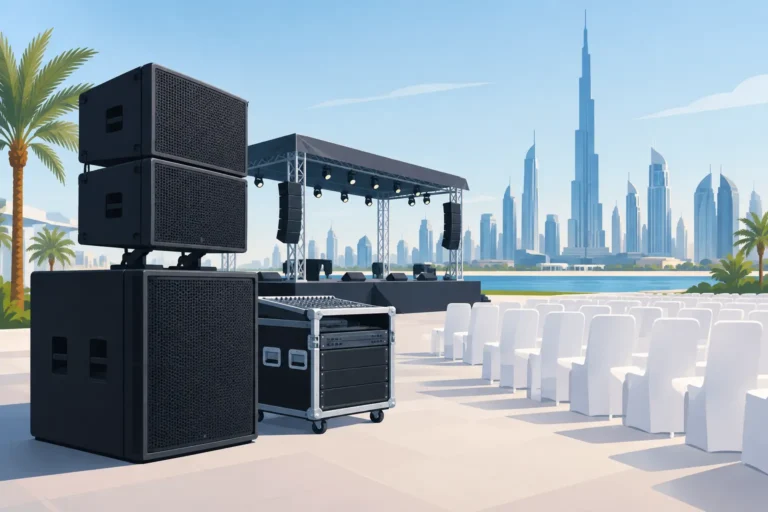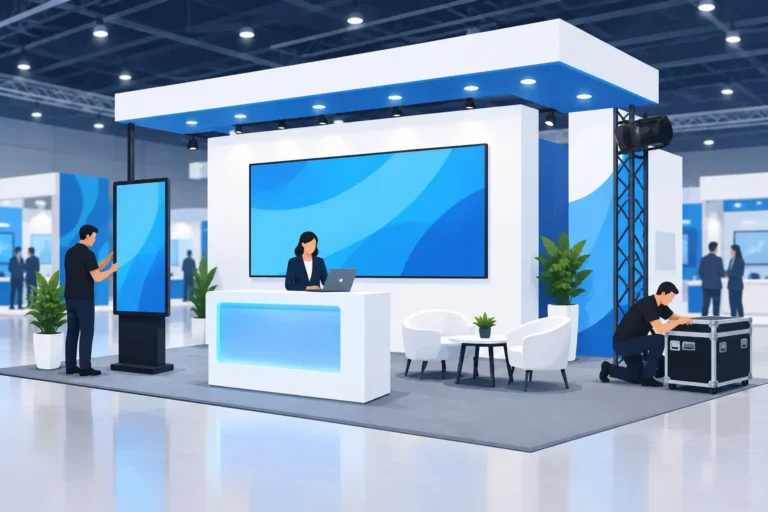
A multilingual summit can lose its audience in seconds: a delegate cannot find the right language channel, an interpreter receives weak audio, or a remote speaker joins without a return feed. Knowing how to plan multilingual summits means designing communication as a complete technical workflow, not adding headsets after the agenda is finalized.
For government forums, international corporate meetings, ministerial sessions, and multi-room conferences, language access affects participation, protocol, and the credibility of the program. The right approach combines early language planning, capable interpretation teams, correctly specified conference technology, and an experienced technical crew that can respond when the schedule changes.
Start with the communication brief
Before selecting equipment, define who needs to understand whom. Request the expected delegate count, room capacities, spoken languages, interpreted languages, session formats, and whether participants will attend in person, remotely, or both. This information determines the required number of interpretation channels, receivers, interpreter positions, microphones, and support staff.
Do not assume that a list of nationalities is the same as a language plan. A summit may welcome attendees from 25 countries while only requiring Arabic-English interpretation. Another may need Arabic, English, French, Russian, and Mandarin because those are the working languages for speakers, panels, and official documents.
Also establish the direction of interpretation. Most formal summits require two-way interpretation between Arabic and English, while additional languages may be one-way from the floor language. If delegates must ask questions and participate actively in their preferred language, the system and interpreter staffing need to support that return path.
Match the interpretation mode to the agenda
Simultaneous interpretation is the standard choice for high-level summits, keynotes, panel discussions, and fast-moving debates. Interpreters work from sound-isolated booths or suitable interpreter positions and deliver the translation with only a short delay. Delegates listen through dedicated receivers and headphones, selecting their preferred channel.
Consecutive interpretation works better for small meetings, bilateral discussions, site visits, and controlled ceremonial moments. The speaker pauses while the interpreter delivers the message. It requires less specialist equipment, but it lengthens every exchange and can interrupt the pace of a large program.
Whispered interpretation may suit a very small delegation seated near the interpreter. It is not an appropriate substitute for simultaneous interpretation in a plenary hall, where sound control and equal access matter. The format should follow the audience experience you need, not simply the lowest initial equipment count.
Build language requirements into agenda and room design
The agenda is a technical document as much as a content document. Share the latest running order with your interpretation provider early, including speaker names, languages, presentation titles, videos, award moments, and audience Q&A. Interpreters need preparation materials to deliver accurate terminology, especially in sectors such as energy, finance, health care, aviation, defense, and public policy.
Include realistic handover time between sessions. A change from a keynote to a panel can involve new microphones, new presentation sources, different language feeds, and a new moderator. If a speaker changes language without notice, interpreters and the audio operator need a clear communication path to adapt quickly.
Room layout also has direct consequences. Interpreter booths should have a clear view of the stage and presentation screens, with clean audio feeds from every active microphone, playback source, and remote contributor. If sightlines are limited, provide reliable program video displays. Position distribution desks where delegates can collect and return receivers without creating congestion at registration or meal breaks.
For multi-room summits, document every room separately. A plenary room may require six language channels, while breakout rooms may need only Arabic-English coverage. Treating all rooms as identical often produces wasted equipment in some spaces and insufficient capacity in others.
Specify the full interpretation signal chain
A reliable multilingual setup is a connected system. It starts with clear speech pickup at the podium, panel table, floor microphones, and remote sources. That audio is routed to interpreters, then distributed as selected language channels to delegates. Each stage needs testing, monitoring, and backup planning.
A typical simultaneous interpretation package includes interpreter consoles, booths where required, a central control unit, infrared or radio-frequency language distribution, delegate receivers, headphones, and professional audio integration. The exact combination depends on room size, venue conditions, channel count, and the number of participants.
Infrared distribution is often preferred for confidential meetings because the signal remains within the room. Radio-frequency systems can be practical across larger spaces or more complex venue layouts, but frequency coordination is essential. In the UAE, radio communications must be properly licensed and managed. For summit organizers, this is not a minor technical detail: it protects operational continuity and avoids preventable interference issues.
Headset quality matters as well. Delegates need intelligible speech at a comfortable listening level, particularly during long sessions. Provide enough receivers for registered users plus a sensible contingency quantity for late arrivals, lost units, VIP requests, and media personnel. A charging, collection, sanitization, and return process should be assigned before doors open.
Plan for microphones, questions, and speaker control
Interpretation quality cannot exceed the quality of the original audio. Use professional microphones appropriate to each speaking position, and make sure presenters understand basic microphone technique. A speaker who turns away from a lectern microphone, speaks over applause, or moves between panel seats without a live microphone creates a problem that no interpreter can fully solve.
For formal delegations and roundtable sessions, conference discussion systems can provide individual microphones, delegate identification, request-to-speak control, and language selection at each seat. This is particularly useful where participation must be managed fairly or the chair needs a clear speaker queue.
Plan audience Q&A in advance. Decide whether questions will be asked from fixed floor microphones, roaming microphones, or a moderated digital queue. Confirm how each question reaches interpreters and whether it must be translated into every active language. A well-managed question process keeps the final third of the program from becoming the least accessible part of the day.
Design hybrid interpretation as a separate workflow
A hybrid summit needs more than a livestream and a video call. Remote participants require a stable program feed, their selected interpretation channel, and a clear way to ask questions. Remote speakers need a return feed, confidence monitoring, technical rehearsal, and a backup connection plan.
Remote interpretation can be effective when interpreters work from a controlled hub or approved remote locations with suitable audio, connectivity, and support. However, it introduces dependencies that an on-site booth setup does not: internet stability, platform routing, participant device quality, and coordination between the event platform, audio team, and interpretation team.
For high-stakes sessions, test every remote speaker at least once before event day. Verify their microphone, camera framing, connection speed, presentation-sharing method, and the language they will speak. Test the actual interpreted return audio, not just the video meeting link. If the speaker loses connection, the show caller should know whether to move to the next agenda item, play a holding video, or switch to a pre-recorded contribution.
AI speech translation can provide useful accessibility support for selected sessions, informal networking, or fast-turnaround content. It should be evaluated carefully for official statements, specialist terminology, sensitive negotiations, and languages where accuracy expectations are especially high. For formal proceedings, professional interpreters remain the appropriate choice when nuance, confidentiality, and accountability are required.
Rehearse the people, not only the equipment
Technical checks should cover every source and destination: podium microphones, panel microphones, video playback, walk-in music, remote callers, interpreter consoles, language channels, delegate receivers, recording, and streaming feeds. Test at the actual volume and operating conditions expected during the summit.
A production rehearsal should also define responsibility. The show caller controls the agenda. The audio operator manages live sound. The interpretation coordinator supports interpreter readiness and language changes. The floor manager guides speakers and resolves practical issues at stage level. These roles can be performed by a compact team on a simple program, but they must be clear.
Prepare a short escalation plan for common failures: a receiver with no audio, a dead microphone battery, an interpreter needing a replacement, a missing presentation, a remote caller dropping out, or an unplanned language request from a VIP. Fast recovery comes from prepared crew, spare equipment, and direct communication, not from hoping the issue does not occur.
Choose support that scales with the summit
For a small executive meeting, a focused package of microphones, interpretation equipment, and an onsite technician may be sufficient. A regional summit with parallel breakouts, protocol guests, broadcast requirements, and hybrid attendance needs a more structured technical operation, from pre-event drawings and channel planning through onsite operation and strike logistics.
DLC Events supports multilingual programs with simultaneous interpretation systems, conference microphones, remote interpretation, AI speech translation, professional audio, and trained technical crews. Rental-based planning allows the package to match the specific venue, language count, and program scope without the ownership, maintenance, and staffing burden of permanent equipment.
The strongest multilingual summits make language access feel almost invisible to delegates. That result is never accidental. It comes from deciding early how every voice enters the system, how every language reaches its audience, and who is accountable when the live program changes.