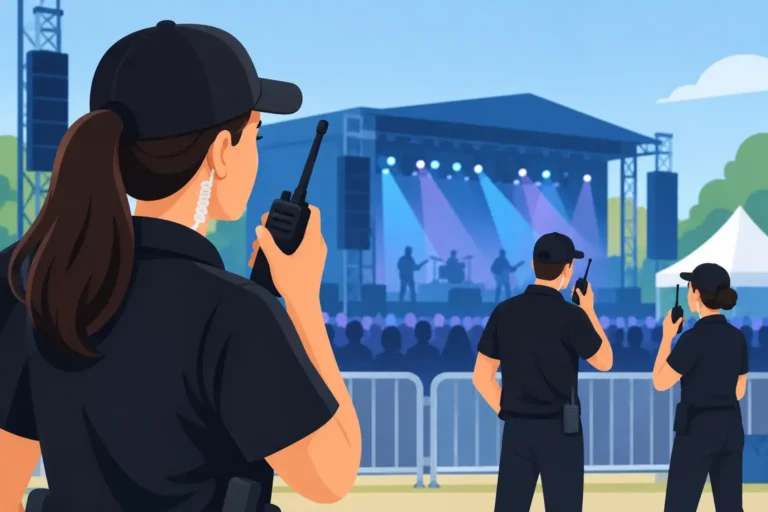
A missed cue at a corporate summit can affect the entire program. The stage manager cannot reach the AV lead, registration needs support, or security must respond before guests notice a problem. Knowing how to deploy two way radios correctly gives every operational team a direct, dependable communication path when timing matters most.
For conferences, exhibitions, film shoots, and live productions, radio deployment is not simply a matter of handing out devices. It requires coverage planning, channel discipline, properly licensed frequencies, trained users, and technical support that remains available throughout the event.
Start With the Event Workflow
The most effective radio plan begins with the people and departments that need to communicate, not the number of radios available. Map the event workflow from load-in to strike. Identify who calls show cues, who manages speakers, who handles guest movement, and who needs to escalate an incident immediately.
A typical conference may assign radios to the event director, production manager, stage manager, audio lead, lighting lead, video lead, registration manager, floor managers, security supervisor, and venue operations contact. An exhibition may require separate groups for organizer operations, exhibitor services, loading dock coordination, security, and technical production.
Not every user should be on the same channel. A single open channel can become crowded quickly, especially during doors open, speaker transitions, or emergency activity. The objective is to keep essential traffic clear without isolating teams that need rapid coordination.
Define Communication Groups Before Setup
Create communication groups based on function and urgency. Production and stage management usually need a dedicated channel because cueing conversations are time-sensitive. Guest services and registration can share an operations channel. Security or medical coordination may require a restricted channel managed by authorized personnel.
A common arrangement includes a main command channel for leadership, an event operations channel, a technical production channel, and one or more private channels for security or specialist teams. The final structure depends on event scale, venue layout, staffing model, and local frequency regulations.
Assign a single communications lead as well. This person should approve channel assignments, manage radio distribution, and make decisions if the event plan changes. Without clear ownership, users may switch channels independently and create unnecessary confusion.
Plan Coverage Across Every Working Area
Radio coverage must be assessed across the full operational footprint, not only inside the main ballroom. Teams often work in back-of-house corridors, loading areas, kitchens, parking zones, outdoor activation spaces, temporary structures, and distant breakout rooms. These locations can introduce physical barriers and dead spots.
Concrete, metal structures, underground spaces, high-rise venues, and large exhibition halls can affect radio performance. In some cases, a higher-power radio, additional equipment, or a revised channel plan may be required. A site survey before the event is the most reliable way to identify these issues.
For multi-floor summits or venue-wide exhibitions, test communication where the work happens: backstage, at registration, inside meeting rooms, on the show floor, and at the farthest loading access point. Testing only from the control room provides a false sense of coverage.
DLC Events can configure professional rental packages around the venue and operating plan, including TDRA-licensed radio communications for events in the UAE. This provides organizers with appropriate equipment, frequency coordination, delivery, setup, and technical assistance without the cost and responsibility of maintaining an in-house fleet.
Choose Radios and Accessories for the Role
The right device depends on the user’s working environment. A floor manager moving between meeting rooms may need a compact portable radio with a discreet earpiece. A security lead working outdoors may require a more durable unit with a high-capacity battery and an audio accessory that remains clear in noisy conditions.
Audio accessories are often as important as the radio itself. Earpieces help protect guest-facing professionalism at conferences and corporate meetings, where loud radio traffic would be distracting. Remote speaker microphones can be useful for production, security, and logistics teams that need to communicate while keeping their hands free.
Consider the following operational factors when specifying a rental package:
- Event duration, including load-in, rehearsals, live days, and strike
- Number of users on each department or channel
- Indoor, outdoor, backstage, and remote working areas
- Noise level and the need for earpieces or speaker microphones
- Battery replacement or charging requirements
- Licensing and frequency coordination requirements
There is a trade-off between simplicity and control. A small training workshop may work well with a limited number of radios on one managed channel. A large international conference with multiple rooms, VIP movement, and a full production crew needs more structured channel separation and closer radio management.
Deploy Two Way Radios With a Controlled Handover
When you deploy two way radios, distribution should be treated as part of event operations. Each radio should be labeled with a unit number and assigned to a named user or department. This creates accountability, simplifies troubleshooting, and makes collection at the end of the day much faster.
Before distribution, confirm that every device has been charged, tested, programmed, and fitted with the correct accessory. Spare batteries, chargers, and replacement earpieces should remain with the technical team or radio desk rather than being dispersed without control.
A short handover briefing is essential. Show users how to power the radio on and off, adjust volume, select their assigned channel, use push-to-talk correctly, and request support. Even experienced users benefit from a quick reminder that they should pause briefly before speaking, keep messages concise, and avoid talking over existing traffic.
For high-profile events, it is useful to issue radios at a central point during crew call, then repeat the process at the start of each day. This lets the communications lead confirm that all key roles are present and working before guests arrive.
Establish Radio Etiquette That Supports the Show
Clear radio etiquette is one of the lowest-cost ways to improve operational control. Users should identify themselves and the person or department they are calling before delivering a message. For example: “Registration to Event Control, we need support at desk three.” The receiving team can acknowledge quickly and keep the channel available.
Avoid long explanations over the radio. If an issue requires detailed discussion, use the radio to connect the right people, then move the conversation to a phone call or in-person discussion where appropriate. This protects channel capacity for immediate operational traffic.
Sensitive information should never be shared casually over an open event channel. This includes VIP locations, guest details, security matters, and commercial discussions. A separate authorized channel and an agreed escalation process help protect privacy and reduce risk.
Radio users should also understand priority language. Establish clear terms for urgent assistance, technical faults, guest emergencies, and routine requests. The exact terminology can be tailored to the client’s procedures, but every team should know what requires an immediate response and what can wait.
Keep Support in Place During the Event
The deployment is only complete when the system is supported through the live program. Batteries can be misplaced, accessories can fail, a new room may be added, or a venue condition may affect coverage. These are manageable issues when a qualified technical team is available and the radio inventory includes sensible contingency.
For larger productions, the radio plan should be reviewed at key points: before doors open, before the main session begins, during major transitions, and before evening programming. A brief check can catch low batteries, misplaced units, channel congestion, or staffing changes before they affect the guest experience.
At the end of each day, collect, count, clean, and recharge equipment. Compare returned radios against the issue list and investigate missing items immediately. This discipline protects the equipment and ensures the next day begins with a complete, tested fleet.
A well-run radio system is largely invisible to attendees. That is exactly the point. When teams can communicate calmly across the venue, speakers reach the stage on time, technical cues land correctly, and organizers retain control even when the schedule changes. Plan the radio deployment early, test it in the real venue environment, and give your crew the communication tools to act with confidence.