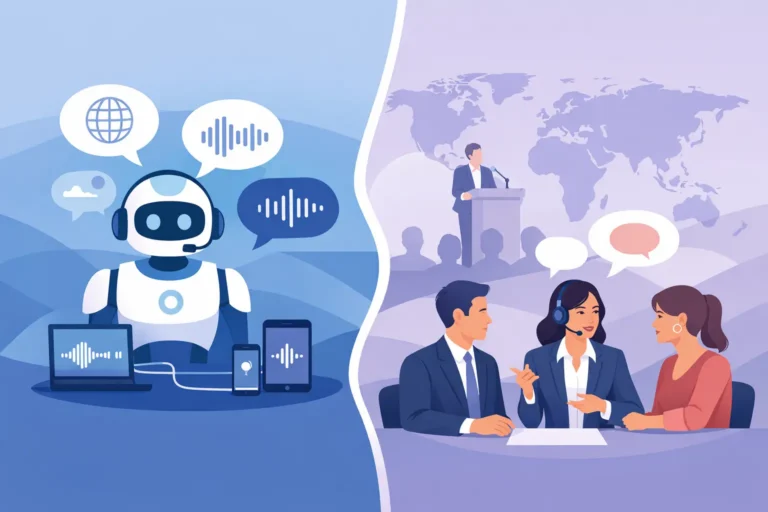
Have you ever been in a room full of people, and nobody could understand each other? That happens a lot at big international events. People fly in from different countries. They speak different languages. And without the right tools, important conversations just get lost in translation.
Did You Know, 77% of respondents observed an increase in multilingual attendees in the last 12 months, with 58% reporting that over 25% of their audience speaks a different language than the presenter
That’s a real problem, it’s more common than you’d think. But here’s the good news, there’s a solution. It’s called simultaneous interpretation equipment. It helps people understand each other in real time, no matter what language they speak. DLC Events in Dubai have made it their mission to get this right, and it’s completely changing the way people communicate at large events around the world.
What Is Simultaneous Interpretation?
Let’s keep it simple. Simultaneous interpretation, simply, means a device translates a speaker’s words in real-time. While the speaker is still talking, the interpreter is already translating. Attendees wear a small headset. They hear the translation in their own language. Nobody has to wait. Nobody gets left behind.
It sounds simple. But pulling it off smoothly takes serious equipment, and serious expertise.
Why Big Events Need the Right Equipment
Imagine you’re at a big conference. The speaker is saying something important. But the audio keeps cutting out. Or the translation is delayed. Or the sound in your headset is full of noise. Frustrating, right? Poor equipment doesn’t just cause small annoyances. It breaks concentration causes people to miss key points. It makes a professional event look unprofessional.
When the simultaneous interpretation equipment works well, nobody thinks about it. People just follow along, understand everything, and walk away feeling good about the event.
That’s what great interpretation equipment does. It disappears into the background, so the real conversations can shine.
The Key Equipment That Makes It All Work
1. Soundproof Interpretation Booths
Interpreters have a tough job. They listen and speak at the same time, constantly, without a break.
If there’s noise around them, their work gets much harder. They make more mistakes. The quality of the translation drops.
Soundproof interpretation booths fix that problem. They block outside noise. They give interpreters a quiet, focused workspace. And when interpreters can concentrate fully, the translation quality goes up, and so does the experience for everyone in the room.
2. Wireless Receivers and Headsets
Old interpretation setups used wired headsets. Wires everywhere. People tripping. Nobody is comfortable.
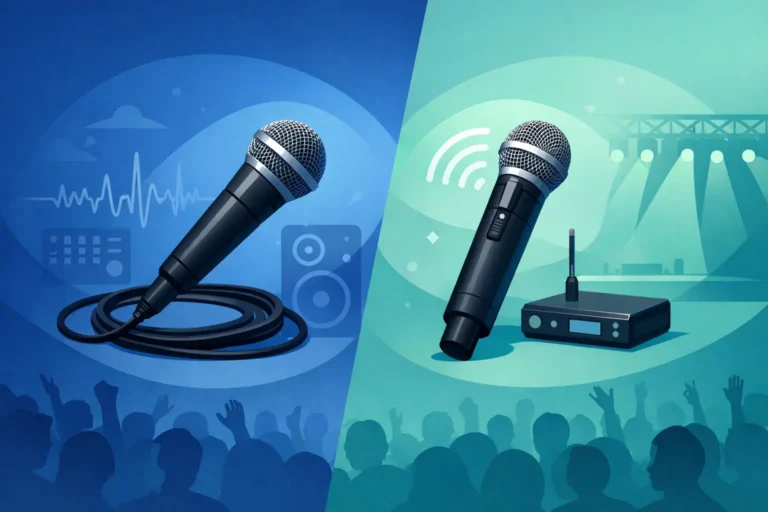
Modern wireless receivers are small, lightweight, and easy to use. Attendees pick up a headset, choose their language channel, and that’s it. They can move around freely. The audio stays clear. No tangled wires, no frustration.
Clean audio matters more than people think. Even a great interpreter can’t fix bad sound quality. The headset is the last step between the interpreter’s voice and the attendee’s ears, and it needs to work perfectly.
3. Interpreter Consoles
These are the control panels that interpreters use during a live event.
With a good console, interpreters can adjust audio levels and switch between channels. This helps communicate with their team in the booth. It gives them control and confidence.
When interpreters feel in control, they perform better. And that directly improves the quality of translation the audience receives.
4. Multi-Channel Systems
At a big international event, you might have attendees who speak Arabic, English, French, Spanish, and Mandarin, all in the same room.
Multi-channel systems make that possible. Each language gets its own channel. Attendees simply select their language on their wireless receiver. Everyone hears the translation they need, all at the same time, with zero interference between channels.
It’s one of the most powerful features of modern interpretation technology, and it’s what makes truly global events possible.
5. Hybrid and Remote Events Are a Big Deal Now
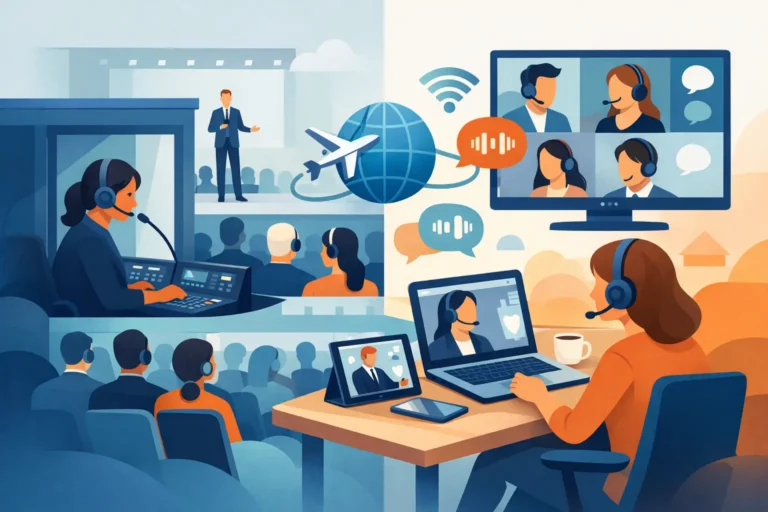
Today, many events are hybrid. Some people are in the room. Others join online from different countries. Both groups need to understand what’s being said.
Remote Simultaneous Interpretation, or RSI, makes that possible. Interpreters can work from anywhere in the world, while attendees in the room and online both receive the same real-time translation through their devices.
By using event technology rental Dubai, UAE, organisers can ensure seamless communication for every participant. This approach is a game-changer. Events no longer need to be limited to a single location or one language. A company in Dubai can host a conference with attendees from ten different countries, and every single person can follow along in their own language.
What Happens Without Good Interpretation Equipment
Let’s paint a picture. A high-level business meeting. Two companies are trying to close a big deal. The interpreter is working without a proper booth, there’s noise everywhere. The wireless receivers keep dropping the signal. Key sentences get lost.
The deal doesn’t close. Not because of the business itself, but because communication broke down.
This is not a rare situation. It happens more often than event organizers like to admit. The right interpretation equipment isn’t a luxury. At multilingual events, it’s a necessity. It’s the difference between a successful event and an expensive disappointment.
Why Choose DLC Events for Simultaneous Interpretation
If you’re planning a multilingual event in Dubai, DLC Events is the team to call.
We provide top-quality simultaneous interpretation equipment, soundproof booths, wireless headsets, interpreter consoles, multi-channel systems, and everything in between. Our setups are built for events of all sizes, from small corporate meetings to large international conferences.
But it’s not just about the equipment. DLC Events sends experienced technicians who handle the full setup, run tests before the event starts, and monitor everything in real time throughout the event. If something needs adjusting, we’re already on it, before anyone in the audience even notices.
We also provide professionally certified interpreters for live, hybrid, and remote events. And if you need documents or videos translated too, we’ve got that covered. So everything, from the stage to the screen, stays clear and consistent for your audience.
Planning an event is never one-size-fits-all, and DLC Events gets that. We sit down with organizers, understand the venue, figure out how many people are attending, and work out exactly how many languages are needed. Then we put together a setup that fits the event perfectly, not a generic package, but something built specifically for you.
Planning a multilingual event?
Contact DLC Events today to get a customized interpretation setup that ensures clear, seamless communication for every attendee.
Get a Free QuoteFrequently Asked Questions (FAQs)
Renting is almost always the smarter choice. You get professional-grade equipment without the upfront cost or maintenance hassle. DLC Events takes care of delivery, setup, and post-event collection, so you don’t have to worry about anything.
Modern multi-channel systems can support many languages at the same time. Whether your event needs two languages or ten, the system can be configured to handle it. DLC Events will customize the setup based on exactly what your event requires.
Yes, for sure! With Remote Simultaneous Interpretation, your interpreters don’t even need to be in the room. They can work from anywhere and still deliver real-time translations to everyone, whether they’re sitting in the venue or joining from their laptop at home. Nobody gets a lesser experience just because they couldn’t make it in person.
It allows attendees to understand the speaker in real time in their preferred language. This keeps everyone engaged, reduces confusion, and helps people follow the event without missing important information.
Yes. Multi-channel systems allow each language to run on a separate channel, so attendees can simply select their language and listen without interference.